Showing posts with label Electronica. Show all posts

Friday, March 11, 2011

Full Circle - Shigeto


Full Circle

Shigeto
Ghostly International.

SCQ Rating: 76%

No other artist has greased Ghostly International’s blog-approved promotional gears quite as much as Shigeto, and the reasons for that are numerous. For one, the artist otherwise known as Zach Saginaw has released three records this year (alongside this full-length, the Semi Circle EP and What We Held On To EP), but it’s clear Ghostly’s enthusiasm for Shigeto goes far beyond the man’s prolific nature. Over two EPs that showcased an oft-experimental fusion of varied styles bound by a singular vision, Ghostly has positioned Shigeto to join acts like Mux Mool and Gold Panda as the imprint’s new graduating class.

It’s impressive company to find oneself in, no doubt, backed by arguably the best electronic label currently running. Yet until Full Circle, Shigeto’s praise seemed huddled toward his technical skill and not whether it could adequately create something greater than a disjointed flow of ideas. Full Circle puts those fears to rest, building upon What We Held On To EP’s embrace of grooves to christen Saginaw’s unique style amid an instrumental hip-hop framework. Alas, pinning this LP with an instrumental hip-hop tag likens to an insult, when tracks like ‘So So Lovely’ and ‘Sky Of the Revolution’ utilize those stuttering beats as a foundation for all of Shigeto’s detailed counter-rhythms. Synth bubbles orbit the scaffolding of ‘Brown Eyed Girl’ and micro-house beats propel ‘Look At All the Smiling Faces’, niceties that somewhat disguise the straightforward digestibility of the set.

A love of jazz also figures prominently into Full Circle, casually loitering the looser confines of these songs and, in the case of ‘Children At Midnight’, taking center-stage with a relaxed jazz-piano sample. Really though, to continue deciphering all of Shigeto’s influences would transform this humble review into a critical essay when, all that aside, Full Circle’s ultimate focus remains groove-oriented. Call it a streamlined take on his more conceptual EPs if you must, but I’d rather hear Shigeto fully explore the possibilities of three ideas in a song as opposed to scratching the surface of twenty. Suddenly all of the hype launched for Shigeto makes sense; he has come "full circle" over the course of 2010, from theoretical taunts to concrete beats, and Ghostly knows this is just the beginning.

Holkham Drones - Luke Abbott


Holkham Drones

Luke Abbott
Border Community Records.

SCQ Rating: 67%

Plenty of moments on Holkham Drones attest to Luke Abbott’s ability to cause elation in both our limbs and mind. A flurry of tones stir up and bedazzle listeners into a cocoon of barely distinguishable details before a procession of glassy notes steals your attention. From completely spellbound, you turn euphoric. Tricky sleights of hand like that one, from ‘Trans Forest Alignment’, are no doubt why James Holden signed Abbott to his exclusive Border Community label, but they also position Abbott at the gateway where only the most insightful electronic artists have passed through. He’s no Richard D. James and he isn’t quite yet Kieran Hebden, but Luke Abbott calls to mind the sensitivity those artists’ can impart through the unlikely means of harsh beats and alien synths.

Not much sounds outwardly pretty on Holkham Drones; in fact, the record feels incredibly self-conscious about overlaying too many ear-pleasing sounds at once. A healthy percentage of these tracks begin in only the partially constructed stage, whirring like machinery (‘More Room’) or gurgling like a chemistry experiment (‘Sirens For the Colour’), and Abbott – as mad scientist – slowly creates beauty out of these awkward collisions. It’s a ballsy approach to innovation, guiding listeners through every sonic manipulation, but it works so long as Abbott has an ace up his sleeve. That sleight of hand works wonders on the title track, a swollen coda gently streamlined to its pristine essentials, as well as on the techno rhythm that meets a shoegaze-worthy summit on ‘Brazil’. By squeezing harmony out of resistant forces, Abbott achieves an off-kilter hypnosis that not only sounds purely analog-based, but renders these tracks cozier than you’d initially believe.

Holkham Drones’ episodic momentum can only bring listeners so close and, at sixty-odd minutes in length, it requires rigorous levels of patience. Abbott’s processes are easier to respect than love, meaning those tuneless warm-ups that bookend some of his tracks will likely merit the skip button after a few spins. Still, weak moments aside, Luke Abbott has one tremendous thing going for him: he’s the only guy that sounds like Luke Abbott. In the world of electronica, individuality is a rare gift indeed.

Enough Conflict - Proem


Enough Conflict

Proem
n5MD Records.

SCQ Rating: 69%

Industrial noise must be a tough drug for electronic artists to dabble in. More often than not, it seems interspersing industrial elements into one’s laptop palette results in an overdose of dark synths that brood over and serrate any notion of a melody that might’ve been. ‘deep sleeping birds’ may be little more than an appetizer to proceedings but its jagged metallic shards repeatedly convinced me to skip those following twelve tracks and play something brighter instead. Little did I know that Enough Conflict’s opener is a red herring, a chrome-heavy chunk of IDM that stands alone in recalling all of those industrial-dependent artists who can’t muster any light to contrast their gloom.

Things take a positive turn from that point on, as Richard Bailey displays electronic songwriting unmasked of its ominous smoke and mirrors. Leave it to a song called ‘guns.knives.lemons’ to first let rays of sunlight upon Bailey’s tough-as-nails beats, but with the help of some acid squiggles and buzz-saw ambience, assenting vibes follow course. Enough Conflict doesn’t ditch its early industrial leanings but balances them more evenly with airy cinematics (‘jiittirrrrriii’) and crystal-clear melodies (‘seafaring velvet waltz’). For electronica fans who find all the doomladen material a bit cumbersome for everyday listening, Proem’s latest acts as an ideal gateway record; still fraught with challenging passages but melded to enticing refrains that, whether dreamy or nightmarish, should give industrial-fearing kids like myself an appreciation for punchier IDM. At times evoking Aphex Twin, Bailey creates concrete song-constructions from the otherworldly ‘she never cries’ and the Drukqs-era ‘a short bit before you go’.

A mixed bag of harsh beat patterns (‘back to fail’) and tender soundscapes (‘kalimba jam’), Enough Conflict, like its title, feels oddly at peace with its scattered ideas. Satisfied letting its unsettled nature drift almost organically song to song, Proem’s eighth LP often feels lacking in narrative, as if each stage of its journey finds disconnected chaos, serenity, or one within the other. Although concise in running-time, the record stretches generously without any major, game-changing highlights – something ultimately more liberating than detracting. It may not be for everyone… but anyone with an ear for IDM would be remiss to pass on a listen of Enough Conflict.

Lucky Shiner - Gold Panda


Lucky Shiner

Gold Panda
Ghostly International.

SCQ Rating: 79%

This summer’s remix-heavy You EP, although enjoyable primarily for its few original tracks, seemed incapable of telling us what Gold Panda was really about. Sure, the title track suggested a beatsmith with the melodic ear of Four Tet while ‘Peaky Caps’ and ‘Killing Yourself On a Beach’ obsessed themselves with micro-house tinkering, but Lucky Shiner illustrates a much more thorough outline of Gold Panda’s strengths and intentions. ‘You’, which prefaces this debut full-length no differently than that cloaked EP, remains the poppiest effort here, but it’s a sugary appetizer compared to Lucky Shiner’s heady bulk.

That opener’s milking of repetition sounds elementary once ‘Vanilla Minus’ peppers over the speakers like a millisecond of Detroit techno spliced and thrown off-axis into an oscillating synth-line. Samples are incorporated patiently, not so patiently as to snowball into eight-minute decadence, but subtle enough for these disparaging pieces to fit snugly within half the time. Imagine hearing the euphoria of The Field but without Axel Willner ever coasting; that’s the Gold Panda M.O. That adventurous take on The Field’s love of repetition inspires a handful of other highlights here, from the stabs of trance like passing headlights on ‘Snow and Taxis’ to the bending momentum of ‘Marriage’’s club-hook.

Perhaps it’s because Gold Panda’s focus on textures tend to override the presence of any prominent bass, but Lucky Shiner – despite its BPM earnings – isn’t made for the dance-floor. Surrounding those upbeat bouts of jubilation are less concrete permutations of electronic songwriting, resulting in the micro-note armies behind ‘I’m With You But I’m Lonely’. The split duo of ‘Before We Talked’ and ‘After We Talked’ stray further from Lucky Shiner’s breathtaking first half; the former would’ve fared better sticking to its morning ambience undertow than tacking a hokey half-melody on top, and the latter track never gathers enough steam to jump beyond its sluggish core.

At Lucky Shiner’s optimal, Gold Panda motions electronic-pop toward a threshold that’s equally melancholic and joyous, with a technique both tender and visceral. ‘Same Dream China’ and ‘India Lately’ even advance his nonchalant approach to worldly influences by pitting deft beats against timeless organic instruments which, sampled or not, deepen the beauty of this collection. It’s certainly one of the better electronic records this year, but I wholeheartedly believe Gold Panda will top this sometime stunning but unbalanced debut.

Monday, November 1, 2010

In the Days Of Jupiter - Lights Out Asia


In the Days Of Jupiter

Lights Out Asia
n5MD Records.

SCQ Rating: 84%

It was in the bleakest week of winter - end of January, beginning of February – when I first heard Lights Out Asia at a friend’s apartment in Montreal. Through a sampling of what my friend judged as key tracks, maybe three in all, I knew this was neither another post-rock band dabbling in electronics nor anything I could readily compare against. Truly, Tanks and Recognizers delivered that something I’d been missing in my record collection, and nothing’s likely to steal its thunder, now or ever.

What makes Tanks and Recognizers so untouchable isn’t that the 2007 outing’s dynamics can’t be cloned or recycled, but that Lights Out Asia don’t even attempt a victory lap. In the Days Of Jupiter zip-lines out to where Eyes Like Brontide wandered two years ago, then skips a few galaxies for some unspoiled pastures, both alien and ambient. Carried weightless into this unfurling distance by ‘All These Worlds Are Yours’ and encountering first-turmoil on ‘Except Europa’, we listeners have no safety chute to steer free with, no rational opening to abuse the skip-button. Best heard as a whole, In the Days Of Jupiter paces its interplanetary tour with extended bouts of cool electronics and sudden collisions of ferocity, typically trading serene nuances (‘All Is Quiet In the Valley’) for blistering guitar assaults (’13 AM’). Although many of these tracks exude spaciousness and foreboding – like ‘Attempt No Landing Here’, which creeps from a supple chill-out track into a Godspeed! You Black Emperor build – but the explosive electronic-rock marriage evident on Tanks and Recognizers is largely gone. Here, the spectrum gets wider, the poles more extreme, and the journey more intense.

As with any dramatic shift, some fans will cry foul, citing their heavy crescendos and Chris Schafer’s vocals as too absent, too often. Those are fair criticisms for a first-listen scenario – hell, they were mine – but for all of Lights Out Asia’s attention to atmosphere, none of it falters into negative space or, worse, tedium. Alternately, the album’s back-end gets surprisingly antsy, retracing wall-to-wall dance production in ‘Then I Hope You Like the Desert’ and epic rise-then-crumble dynamics on ‘Shifting Sands Wreck Ships’. Like its limitless cover-art, In the Days Of Jupiter keeps blurring the horizon, camouflaging as a meditative affair when emotion is raging just beneath the clouds. There’s no going back, and fortunately, Lights Out Asia knew this before I did.

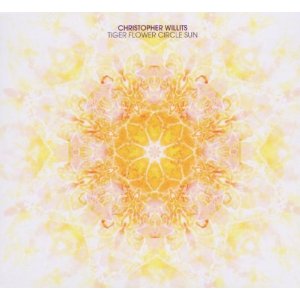
Tiger Flower Circle Sun - Christopher Willits


Tiger Flower Circle Sun

Christopher Willits
Ghostly International.

SCQ Rating: 67%

Elusive records, oh where to begin? No one’s collection is complete without a few LPs that shun understanding and accessibility, albums you spin every few months only to relive their intrinsic novelty. No stranger to the outer limits of musical exploration, Christopher Willits’ latest effort is in many ways one of his most welcoming, full of warm tones and bristling beats, yet be warned: passing its open gates may lead to an open canvas, unfettered by passages or directions. In keeping with many of his twenty or so releases, Tiger Flower Circle Sun roams freely through organic electronica, soft glitchiness and curious dream-pop, at once everywhere and nowhere.

As with its title’s word association, Tiger Flower Circle Sun’s sequencing has grown strong thanks to Willit’s mysticism, which allows the live-drum kicking ‘Sun Body’ or choral-based ‘Green Faces’ to blossom from neighbouring ambient pieces. And while surprising turns aren’t uncommon – take the deformed folk that backs Willits’ affecting vocals on ‘Light Into Branches’ – they tend to hide out inside aurally elaborate soundscapes that steer clear of melodic arches. Sometimes these digital beds create convincing plateaus that benefit the whole, as on ‘Uplifting the Streets’ and the CD/mp3 bonus track ‘Flowers Into Stardust’, but elsewhere these instrumentals pulsate on stagnant repetition, rendering ‘The Hands Connect To the Heart’ and ‘The Heart Connects To the Head’ two cerebral codas worth passing over. Willits’ muse, both sonically and philosophically, calls to mind the catalog of White Rainbow (aka Adam Forkner), as many aspects of this release could reasonably be Forkner disassembling epic tracks down to purposeful gears that either loiter or churn out crucial tempo switches. In its fragmented form, however, Tiger Flower Circle Sun seems unwilling to unveil any trajectory or moment-of-realization. All that's epic is how lost we can become.

It’s a commendable but compromising decision to take, and Tiger Flower Circle Sun saddles the cohesive and inexplicable quite naturally. This evenness - Willits’ steady hand, if you will - ensures a collection that will confound and reward you. In my eyes, the only downside to elusive records isn’t the frustration but the initial disappointment – when nothing quite clicks and you’re tempted to move on – that sometimes abandons these mysteries before they’ve matured. Be hasty with this album at your own risk!

Switching For a Living - Cignol


Switching For a Living

Cignol
Alphabet Set Records.

SCQ Rating: 73%

Around this time last year, SCQ was blindsided by Red Box Recorder’s Colour Codes, a multi-layered genre-hop on all of electronica’s best-kept headphone secrets. The month of August must have some zodiac-inspired significance for anonymous-and-Irish beat-makers, then, because Cignol presents a clear showcase of talent on the crafty Switching For a Living.

As restless as Colour Codes but adhering to a more nuanced flow, Switching For a Living runs the gamut over its eleven tracks, delving into cinematic acid-house (‘Horizons’), pastoral beat-weaving (on the Boards of Canada-inspired ‘Sitruk’), and organic-infused chill-out (‘Tumnal’). As capably as Cignol can evoke airy loops and ear-pleasing stutters, his forte inarguably remains mixing these elements into acid concoctions. Borrowing from Aphex Twin’s Selected Ambient Works famous playbook, ‘Role Player’ and ‘Nite Garden’ thrive by imbedding migrant atmospheres over some hard-hat noodling. The quality is remarkably consistent, if rarely thrilling, but what Cignol seems to edit from this album is a palpable sense of personality. At eleven tracks and forty-five minutes in length, Switching For a Living is well-sequenced and perfectly consumable as textbook acid-house. Without any idiosyncrasies or surprises to speak of, however, Cignol’s work seems destined to remain a pleasant discovery in a static genre.

From Arcs To Embers - Bitcrush


From Arcs To Embers

Bitcrush
n5MD Records.

SCQ Rating: 78%

Remix albums are rarely a popular type of release, typically stirring as much anticipation as your average London Philharmonic Orchestra Plays the Music Of… compilation. I suspect a number of grounds for disinterest from a listener’s perspective: (1) the compilation lacks an appealing flow due to so many hands in the jar, (2) it’s recycled material that borrows from an original you likely prefer, and all these qualms arise after you consider the inherent disconnect behind The Remix as an idea, (3) whereby an artist who didn’t write the song reorganizes it without the heart. Coming from the top tiers of n5MD, however, this remix project made clear straightaway that all presumptions were mute.

Earlier this year, I was forced to take a hard look at my tenets of remix-ignorance upon the release of Aarktica’s In Sea Remixes, which, dare I say, nearly trumps the original 2009 effort. Bitcrush (Mike Cadoo, previously of Gridlock and Dryft) takes this revisionist approach a few step further with From Arcs To Embers, a collection of remixes that span his six releases, from 2004’s Enarc up to this year’s Of Embers. And I shouldn’t be surprised how excellent it is; a thrilling elegy of pillowed glitches and sweeping electronic melodies, From Arcs To Embers brings the emotional crème of Bitcrush’s compositions to the ice-surface. No one with a pulse should be able to escape the delicate power of Near the Parenthesis’ remix of ‘The Days We Spent Within’, which unfurls with the majesty of a subdued Sigur Ros epic, nor should they underestimate Bersarin Quartett’s widescreen remix of ‘Post’ which opens the album. With a strong focus on drifting beats and still-life atmospherics, it’s architecturally smart to have some head-nod worthy percussion, courtesy of Worm Is Green and Funckarma, bolster the LP from getting sleepy. Throw some explosive charges into the mix, such as Jatun’s take on ‘Waiting For Something’ and port-royal’s glacial stretch on ‘Of Embers’, and here we have another remix record in 2010 that has positively stumped me. Acting as both a collaborative celebration between well-respected electronic musicians and a necessary reminder of Bitcrush's exciting output so far, From Arcs To Embers closes this early chapter of Mike Cadoo's discography with grace and heart.

Unleft - Helios


Unleft

Helios
Unseen Records.

SCQ Rating: 73%

Of home-listening electronica’s many sentinels, few possess Helios’ reputation for well-rounded instrumental songwriting on a track-by-track basis. Never satisfied with segue noodling or left-turns that derail a song’s momentum, Helios (Keith Kenniff) ensures that each composition is self-sustaining, pillared by its ominous progressions and founded on his knack for gravitas. On one hand, this flawless approach to songwriting has threatened to defang his LP work, rendering each track a predictable cousin to a previously recorded shade of melancholy. And although 2008’s Caesura adequately proved this notion false – or, at least, testified to Kenniff’s ability to write a moving full-length – no one was expecting Kenniff to bail on his tonal palette and surprise his listeners with an unexpected shift.

For fans of Helios who encourage his vigilant respect for full-lengths but wish his albums didn’t suffer from too much aesthetic forethought, Unleft will find a cushy spot on your record-rotation mantle. As a collection of orphaned tracks recorded between 2000 and 2009, Unleft celebrates the subtle variety within Helios’ catalog by touring through his secretive playbook. A warped guitar that buzzes behind ‘Cross the Ocean’ gets drowned-out by echoed piano bits and an unflinching breakbeat, whereas ‘Friedel’ goes minimalist with one slow-motion build of ambient keys that blows open. It’s refreshing to hear Kenniff ease back on his perfectionist tendencies, letting ‘Every Hair On Your Head’ wash delicately across its four-minute run-time without menacing the aura. The odd track even sounds indifferent because Kenniff hasn’t unprovoked it to move mountains but any fan of Helios should come to love airy breaths of solitude like ‘The Jaguar Sun’ for what they are.

Granted, only a few cuts here rival the heart-wrenching drama of Caesura or Eingya but, having sequenced Unleft no differently than those proper albums, Helios weaves his crunchy organic beats and restrained keys through the usual emotional gamut. With the production still top-notch and melodies deserving of the Helios canon, Kenniff has delivered a sweet stop-gap release no fan should overlook.

Captured From Static - Northcape


Captured From Static

Northcape
Sun Sea Sky Records.

SCQ Rating: 75%

Finding soul amid machinery has been the greatest challenge at the root of electronica, its presence - however lucid or impossible - defining the genre’s successes and failures. Each masterwork in its field is heralded for possessing that humane telltale, imbedding each click and tone with otherworldly personality, and yet pinpointing those gears at work is, at best, a matter of opinion. Captured From Static, the latest release by Northcape (Alastair Brown), falls into that generous gray area, a work that finds human fingerprints beneath the staunchly electronic sound.

Operating on crisp drum-machines and a pristine palette of keys, Captured From Static calls to mind some key victories for home-listening electronica this past decade. Variety is scattered yet buried in frozen tones; ‘Approaching the Trig Point’, for example, evokes the icy melodies of early Morr Music before ‘Grove Park’ steps into a micro-house inspired momentum. Those references aren’t difficult to detect, but they are initially overshadowed by Northcape’s frosty touch that unites Captured From Static in a tonal wash. Gauzy like the most detail-oriented shoegaze guitarist, Northcape's stimulating atmospheres call to mind an IDM-loving, albeit less morose, The Sight Below.

That Captured From Static welcomes comparisons to turn-of-the-century era electronic movements doesn’t render it dated, as these compositions sound splendidly futurist. Instead, Northcape’s serious focus on songcraft gives a conservative impression, one that on initial spins flirts with appearing faceless, yet as its songs envelop listeners with efficient, ego-free techniques, so too does Captured From Static’s personality bloom from the ice. The couplet of ‘Into Sunlight’ and ‘First Day In a New Town’ best represent Brown’s versatility, the former’s keys hanging like fog over a beatless abyss, the latter anchored by head-nod worthy percussion. With Northcape, you’re never quite sure whether his work is transmitting through expressive moods or technical austerity, but there’s no questioning the fingerprint visible upon each note.

Doesn't feel like a long way by northcape

Tuesday, September 28, 2010

Mind Altar EP - Deastro


Mind Altar EP

Deastro
Ghostly International.

SCQ Rating: 77%

Despite all of Moondagger’s drastic genre-turns and predominantly goofy lyrics, its production qualities kept most astute listeners on the fence. That Deastro, who is known to friends as Randolph Chabot, managed to overcome his debut’s youthful attention span with a veteran’s aptitude for electronics seemed like a saving grace the first time around, and Chabot appears uninterested in risking another half-hearted reception. Gathering songs from a tumultuous, post-Moondagger writing period that initially littered track-by-track onto Deastro’s blog, Mind Altar EP finds the producer going back to the drawing board for a winning formula.

If you’ve heard the title track, a galvanic, soft-focus electro-pop jam that sizzles and menaces like a drugged-out summer sun, you’ll know first-hand Deastro pinpointed the formula to move forward with. Abandoning the hectic hodgepodge of Moondagger for an unfurling utopia of echo-drenched productions, Deastro has reemerged a cagey experimentalist with ‘Pastor Kid Redux Edition’, a fatalistic beat-n-organ mashing, and the snow-crunched dance grooves of ‘Get Frostied’. With the majority of these tracks mixing hyperactive electronic codas with layers of keys and Chabot’s vocals, Mind Altar EP delivers Deastro’s most focused songwriting yet, free from over-thinking but obscured in threadbare clouds of sensation. Such an approach is apparent on highlights like ‘The Concept of Land Ownership’ and ‘World of Shadow’, two vaguely cinematic compositions that wrestle a radical niche (think glo-fi meets shoegaze) out of a massive emotive scope.

Harnessing a more serious-minded set of exploratory songs, Mind Altar EP is rightfully getting the Ghostly treatment, remastered and armed with three bonus tracks. The fleeting promise behind Moondagger has officially landed.

Vade - Roel Funcken


Vade

Roel Funcken
Ad Noiseam Records.

SCQ Rating: 78%

The gears at work beneath ‘Gallice’, the opening track from Roel (half of Funckarma) Funcken’s solo debut, announce themselves like oil and water, colliding so dispassionately one could swear the song was trying to tear itself in two. Its toneless squiggles bubbling next to dreamy shards of melody may sound scatterbrained but it’s entirely ear-friendly, anchored by shape-shifting beats and a patient tempo. Showing no sign of strain between Ad Noiseam’s purist stance on experimentalism and Funcken’s cushy electronics, ‘Gallice’ weaves the first layer of an intricate sonic blanket that should no doubt comfort fans of thinking-man’s electronica. And while Vade operates on an uncharacteristically softer palette than most Ad Noiseam releases, Funcken lives up to the label’s refusal to settle for pretty.

Unlike the intensity present in Funcken’s other work (most notably Funckarma’s Dubstoned series), Vade explores dense pockets of sound that feel laid-back and cerebral. The serene keys of ‘Lyra Stellum’ become more alien with each ricochet off its structure’s caved walls, no differently than how the acid-squeals peppering throughout ‘Vertox Dreaming’ get increasingly rougher thanks to some heavier elasticized beats. Funcken rarely lets a song float by on its own momentum and, while that gives his dreamier material like ‘Ledge’ some visceral awareness, it also doesn’t spoil Vade’s chilled-out spirit.

As enigmatic and relaxing as ‘Daze Flextone’ and the lot are, Funcken knows when to infuse some aggression to keep this LP’s seventy-minute runtime from falling asleep. ‘Halfkriel’ jumps heartily into Aphex Twin styled drill-n-bass, ‘Martyrz’ replicates some big-beat dynamics of The Chemical Brothers circa 2002, and ‘Spi Trade’ blenders up some vaguely industrial sounding techno. Often cold and convulsing, Funcken’s heavier fare can drag its feet – particularly on ‘Lajor Mazer’, which sounds like the Jaws theme performed by grimey synth-saws – but every track here champions Funcken’s worldly techniques in different lights. What isn’t subtly breathtaking is still impressive.

Earlier I described Vade as “thinking-man’s electronica”. I wasn’t sure what I meant by that but it still feels right. And maybe I’m just looking for an alternative, less-awful way to infer IDM… what 90s snobs defined as Intelligent Dance Music. Despite the ridiculous implications of such a title, IDM has managed to stick around courtesy of mind-bending albums like Vade that require serious armchair time in order to appreciate the many aural complexities. By resisting the urge to repeat itself and bridging electronic genres in wholly bizarre ways, Vade deserves a generous-to-the-point-of-pompous tag like IDM. Despite its heavy, demanding course, one couldn’t ask for much more from Roel Funcken; I, for one, might ask in the future for a little less.

You EP - Gold Panda


You EP

Gold Panda
Ghostly International.

SCQ Rating: 76%

As enthralling as the artist behind Gold Panda has crafted himself an identity - mixing extroverted vibes with a stranger’s mystique - it has been difficult to see the man’s releases as anything but virtual mirages on this American side of the pond. Images of his cover-art are commonplace but track-listings and street-dates have been harder to pin down; even on Gold Panda’s Myspace page, most releases were accompanied by 2010 and a series of question marks. Having spent the past few months finessing his fan-base on tour-circuits, Gold Panda looks eager to make this his breakthrough year with You EP (released by Ghostly International here in North America).

Although the physical 12” only carries two Gold Panda tracks (the digital version bears an additional bonus track and both versions offer remixes galore), You EP pays greater dividends than simply being a widely released physical memento. Beyond the title track’s immediate catchiness – think an emotionally charged take on Four Tet’s ‘Smile Around the Face’ – Gold Panda shows range with the house-frosted minimalism of ‘Peaky Caps’ and the frozen glitches hiding a warm melody on ‘Killing Yourself On a Beach’ (on digital version only). Although ‘You’ is gathering due attention for Gold Panda’s craft, my admiration tends to gravitate toward these other originals; both versatile in mood and BPM while never leaning on easy hooks, expansiveness could be Gold Panda's future M.O.

Now typically I’m the kind of listener who gets as excited about remixes as he does about taking out the recycling, yet these ‘You’ remixes easily double the EP’s playability. Surely it helps when a group of top-shelf remixers are on board, each capable of throwing fresh curveballs from their sleeves. Recent tour-mate Seams loops a fragment of the original into this hypnotic display of incidental harmonics before letting the song’s stuttering hook loose of the haze. Next up is Osborne’s remix, which duct-tapes Gold Panda’s track in a suitcase and morphs it over a worldly voyage of soft club grooves and a wonderfully off-kilter keyboard solo. Additional (but digital-only) remixes by Dam Mantle and Minotaur Shock highlight the single in continuously unique ways, calling attention to their own knack for melody while propping Gold Panda’s. Finding no shortage of ways to explore a single cut without ruining the original, these remixers help flesh out Gold Panda’s underhyped sonic chops. Although Ghostly’s 12”, in limited copies and beautifully packaged, is for many a first chance to grab Gold Panda’s music in the physical sense, it’s hard to refute the extra perks offered by the digital version. Lucky for you, dear reader, neither choice will leave you disappointed.

Thursday, August 12, 2010

Boca Negra - Chicago Underground Duo


Boca Negra

Chicago Underground Duo
Thrill Jockey Records.

No Ripcord Rating: 6
SCQ Rating: 64%


For any hot-blooded music adventurist, avant-jazz records should harness high expectations for the sole reason that all rules are, in effect, broken. As long as its listeners are acquainted with jazz and excited by its standard forms, its fluent rhythms, this futurist sub-genre should be a cakewalk of subjecting classic templates to radical reinvention. This premise of endless possibilities, while exciting when spouted off in jargon, doesn’t often translate well to tape. What happens post-structure? How does one weigh traditional jazz trademarks against an unbridled desire to dive into sonic unknowns? In other words, if avant-jazz is by definition the evolution of jazz, how does its soul usually get lost in the shuffle?

Boca Negra, the fifth release by Rob Mazurek and Chad Taylor, doesn’t answer any of my genre-existential questions so much as further enshroud them. Yet still, I’m oddly satisfied. Even amid this record’s most loosely structured, grating moments – the aimless improvisations for 'Green Ants', the shrugging effects on 'Roots and Shooting Stars' – Boca Negra carries the flexible spirit of jazz in tow, maintaining its soul instead of crawling the nihilistic wasteland avant-jazz efforts often settle for. This - for lack of better word - authenticity vindicates some compositions that initially sounded slapdash, transforming the randomly bonkers tones of a track like 'Left Hand of Darkness' into a svelte, almost romantic rumination. Other songs unveil their treasures more generously; 'Hermeto' is a melodic coda of interloping keys and 'Confliction' hammers its baggage over traumatic piano chords before fading into a wasp’s nest of tight bass, deft percussion and shrill horns. By challenging their audience with constant dynamic shifts, Chicago Underground Duo inevitably render Boca Negra a prickly affair – hard to unravel, tougher to comfortably lose oneself in – and that makes rare moments of uncluttered beauty all the more pleasurable. Finale 'Vergence' utilizes electronic textures more honestly than its predecessors and basks in the after-hours glow of its minimal beats and sweeping ambience without losing a pinch of avant-jazz cred. The result truly dwarfs the cathartic outbursts employed throughout much of Boca Negra, and transcends my jargon about revolutionizing a genre. No thesis, no bells or whistles; Vergence just goes out and creates anew.

My high expectations for Boca Negra, misguided as they were, have been consoled, if not met, by the realization that if any act can legitimize avant-jazz beyond its narrow niche (never mind my aforementioned doubts), Chicago Underground Duo have the verve and creativity to enable it.

(This review was originally published on No Ripcord...)

Black Sands - Bonobo


Black Sands

Bonobo
Ninja Tune Records.

SCQ Rating: 79%

In late 2008, I looked for a nostalgia trip in You Don’t Know, the triple-disc Ninja Tune compilation that sought to prove precisely what the title implied: that I didn’t know the scope and reach of the London-based imprint. Sadly, they were right (Pop Levi… really?). Before selling it last August, however, I pillaged what small discoveries I found worth keeping and, surprise-surprise, both Bonobo tracks made the cut. Whatever you call his craft, be it downtempo, nu-jazz or ugh… chill-out, Bonobo (AKA Simon Green) has stayed true to his aesthetic without straying from the indie-cool consciousness that abandoned trip-hop nearly a decade ago. How Green appears to have clung to crossover relevance all this time boils down to the same two-step strategy that vindicated The Cinematic Orchestra’s Ma Fleur in 2007: (1) reduce your output to a record every four years and (2) show your age.

Arriving four years after Days To Come, Black Sands carries the quiet majesty of an audiophile-engineered jazz record, enunciating rich tones of brass and wind instruments in fusion with deftly programmed electronic beats. Sounds familiar, right? No doubt, the fact that so many of Bonobo’s contemporaries (or in some cases, copycats) have fallen off the map does instill his style with a renewed purpose, filling a genre-hole as if it’s a public service, but the critical step in remaining prominent will always be evolution. A quick listen to Black Sands will identify only the dated labels I’ve listed above, while its progressive genius hides in the countless details that unveil themselves upon closer listening. Take the brisk IDM slices and Burial-esque vocal-sampling that plays over ‘1009’’s sorrowful strings, or the island-rhythms that throw ‘We Could Forever’ into an unbalanced groove. How about those loose hip-hop beats that lay ‘Kong’ in an early-evening summer haze, and the dull but grimey saw effect that evokes a slow-motion nightclub beneath the breezy haze of ‘Eyesdown’? Offering no shortage of subtle embellishments I long to salute, Black Sands is the opposite of background muzik and requires a patient ear.

Granted, there are moments on record that suggest Green might be taking all of us on another nostalgia trip. In its smooth bass and lite-jazz arrangement, ‘El Toro’ opens like an AM radio intermezzo while the vocal contributions of Andreya Triana sound dangerously close to Zero 7 (and by Zero 7, I mean 2001). These backward glances are merely showing the roots from which Bonobo has risen, from the ashes of chill-out into a sophisticated ambassador of jazz and electronica. Black Sands is more than Green’s finest album, it’s the culmination of all trip-hop’s forgotten promise and, if tracks like ‘Kiara’ and ‘Animals’ don’t land on the next label compilation, it’s possible that no one will know Ninja Tune.

Semi Circle EP - Shigeto


Semi Circle EP

Shigeto
Ghostly International/Moodgadget.

SCQ Rating: 76%

Recently I had the pleasure of sitting in on a poetry workshop that, for a few hours, discussed how a single line-break or preference of punctuation can shape and distort how a poem is read. Poetry’s lawless world of syntax, where anything can transcend if it’s positioned just right, trades contrived for exciting with seemingly minute details, and electronica thrives by the same gray boundaries. Shigeto, moniker for Zach Saginaw, seems to be well-versed in bending genre rules on Semi Circle EP, his gauntlet of a debut for Ghostly International.

Loaded with a heavy back-story – that of Saginaw’s grandmother, who was imprisoned in an American internment camp for citizens with Japanese roots – Semi Circle only seems burdened on opening segue ‘Beginnings’. Over the subsequent sixteen minutes, Shigeto’s wall-to-wall techniques nearly disguise his historical crate-digging. Hip-hop beats are consistently manipulated, at times combined with heavy Toro Y Moi-styled fades (as on ‘There Is Always Hope’), or supplying the urban grit under ‘Eternal Life’’s cascading piano-work. ‘Bakers Blunt Basics’ is the electronic adaptation of that unreliable faucet in your house that rises and drops in pressure, all unpredictable swings in pitch and tempo, while the romantic keys of ‘Embrace the Cold’ progressively go tone-deaf, morphing into an IDM-inspired icicle-march even Pantha du Prince should marvel at. However these instrumental tracks are connected to the regrettable era that imprisoned Saginaw’s grandmother, Semi Circle makes for an adventurous quarter-hour as well as an inspired tribute. And if you’re feeling raw about how short it is, no worries; this EP is just a precursor to Full Circle, Shigeto’s full-length due out on Ghostly later this year.

Walls - Walls


Walls

Walls
Kompakt Records.

SCQ Rating: 77%

As far as techno labels go, one would be hard-pressed to find a roster with higher quality standards, artist for artist, than Kompakt. While producers like Thomas Fehlmann, The Field and Gui Boratto represent their domineering crossover relevance, Kompakt’s lesser-celebrated records, which commonly fall between the cracks of those titan’s releases, often say far more about the state of progressive electronica. So it’s curious that the latest under-the-radar act to bear Kompakt’s logo, Walls, stakes their sonic trademarks to electronic-rock fault-lines with a debut that might be the German imprint’s most accessible hybrid to date.

Born through a matter-of-fact heartbeat and humid synths that hiss as though breaking free of shifting soil, Walls announces itself like an earthquake clenching its plates under civilization. We’ve heard variations on this sonic eruption before which is why, at the three minute mark, ‘Burnt Sienna’ breaks like a phoenix through the layers of active decay with a simple dance hook that at once switches gears while placing the track’s varied trajectories in odd synergy. Now that they have our attention, the London-based duo of Alessio Natallzia and Sam Willis stretch their fuzz-strewn electronics into varied song-structures, some loose like the airy keys and resonant guitar of ‘Soft Cover People’, others tight and punchy like the drum-machine kraut of ‘Gaberdine’. At its most abstract (as on ‘Austerlitz Wide Open’), Walls evokes the netherworld psyche of Black Dice’s Beaches & Canyons while, at its grooviest (the highlight ‘Hang Four’), Natallzia and Willis use a doped-out disco beat to pulsate some reverb-drenched guitar and frantic effect-loops.

Although executed on a far more organic level, Walls has Kompakt’s M.O. all over it, employing different speeds to create boldly complex electronic rhythms. That’s just this debut’s skeletal surface though, as what makes Walls such an enigmatic listen is trying to decipher which gears are pushing the compositions forward. There are copious amounts of haze but none of it is excused as smoke and mirrors, they fade techno trademarks in and out of focus and even throw vocals into the mix – all without frustrating the listener. By allowing the majority of their hooks to lay camouflaged in this tangled half-hour debut, Walls look eager to pave their own M.O. for being Kompakt’s only electronic jam-band. All the power to them.

Wednesday, May 26, 2010

It All Falls Apart - The Sight Below


It All Falls Apart

The Sight Below
Ghostly International.

SCQ Rating: 76%

What seemed so exemplary about Glider, Rafael Anton Irisarri AKA The Sight Below’s 2008 debut, was how it introduced his craft fully formed. His ability to evoke complicated strains of hope and melancholy from looped guitars was enough to turn any laptop purist green with envy, while even his fondness for 4/4 beats fronted an audiophile-worthy understudy of distinct details and subtle, offsetting rhythms. In short, Glider presented an artist perfecting one of electronica’s most compelling subgenres live-off-the-floor and its iron-tight focus left little need for second offerings. Fittingly, It All Falls Apart acknowledges the finite possibilities of continuing Glider’s dancefloor-cinematics, stripping back its thumping beats and diving into the murky echoes of Irisarri’s rippling guitar-work.

If Glider was understandably misinterpreted as an homage to Wolfgang Voigt’s Gas project, It All Falls Apart imparts a more sprawling facet of The Sight Below’s unique sound that suggests a closer affinity for shoegaze. With his signature beats marginalized to later tracks, The Sight Below devotes the spotlight of ‘Shimmer’ and ‘Fervent’ to his effect-laden six-strings, creating waves of ebbing drones that bleed into one another, all grays and blues. Think of it as shoegaze evaporating; its muddled guitars like upside-down icicles dripping toward the heavens, forming cloud-heavy structures from whispered progressions. Some of this inherent robustness owes credit to Slowdive’s Simon Scott, who reportedly contributed to the whole of It All Falls Apart and offered insights toward Irisarri’s expansive new compositions (none more so than ‘Stagger’, the thirteen-minute closing track that meanders but never aimlessly, dawdles but never tediously). What else could encompass shoegaze in the year 2010 as truthfully as this series of muddled explorations, swagger-less and spectral?

Like The Field’s strategy on Yesterday & Today, Irisarri permits It All Falls Apart’s extensive track-lengths for the sake of mixing new techniques with older ones… and it’s time well-spent. The metronome-like pulse of Glider still finds some vistas to occupy here, pushing the Copia-era Eluvium haze of ‘Burn Me Out From the Inside’ forward or sifting between the surface of ‘Through the Gaps In the Land’ and its dim oblivion. Besides these two tracks showing off the subtle evolution Irisarri first promised with last fall’s Murmur EP, the reemergence of some beat-driven compositions goes far in complimenting this follow-up’s new direction. Also in line with Yesterday & Today is how The Sight Below’s first vocal presence (courtesy of Tiny Vespers singer Jesy Fortino) is a first cover (Joy Division’s ‘New Dawn Fades’) which should thrill some noir-minded indie-kids as thoroughly as fans of gloomy electronica. Both tragically brooding mood-music and fatalistic dancefloor fodder, It All Falls Apart matches its cover-art by sounding, dare I say, cosmopolitan… the type of record that evokes numbed sensuality as clearly as it does overcast landscapes.

Friday, May 21, 2010

Seven Saturdays - Seven Saturdays


Seven Saturdays

Seven Saturdays
Self-released.

SCQ Rating: 75%

With a name like Seven Saturdays, one might peg Jonathan D. Haskell’s project as a triumphant ode to excess that muses weeklong binges running Sunday through Sunday, or a chronological soundtrack to seven consecutive weekends. While either could be a possible root of origin for this Los Angeles multi-instrumentalist’s moniker, I can assure you Haskell’s debut EP sounds prepped for neither extroverted clubs nor raging house-parties. Instead, we’re ushered into the twilight hues and nocturnal tones of ‘The Shallow End’, a track as dark and comforting as the backseat of a taxicab once you’ve stumbled free of the dancehall’s dry-ice and sweat-covered crowds. Over the course of thirty minutes, Seven Saturdays doesn’t deal with weekend throw-downs so much as escaping their chaos for quiet reflection.

Delivering on that opener’s foreboding promise, ‘Secret Things’, in its rise from pedestrian live-drums to swooning orchestration, reveals Haskell’s top-form trademarks as that of a pop-conductor. Communicating a distinctly urban air drawn from his inescapable home of Los Angeles, Seven Saturdays pivots between late-night, lonely traffic lights (on the palpably transient ‘Love In the Time of Anticipated Defeat’) and string-laden daydreams (‘Good Morning, I Love You’), assured in their overt romanticism but grandiose in the scope of one’s wistful imagination. That combination of melodic drones and symphonic pop, respectively, gels together fluently, establishing a rock-solid emotional range while trading low-end meditations for sky-bound anthems. No track accomplishes the latter better than ‘A Beautiful Day’, the closing track which overrules Haskell’s quieter output and decides Seven Saturdays’ M.O. for surging, harmonious scores caught somewhere between live-instrument electronica and post-rock.

His basic set-up of keys, violin and drums may seem redolent of another electronic-fringe artist who resides just up the coast, Jimmy Lavalle of the Album Leaf, and the comparisons are fruitful for both artists. Yet while Lavalle has mellowed his output into increasingly digestible mood-music tablets, Jonathan D. Haskell imbues a restlessness throughout Seven Saturdays, beatific yet hungry, which over five tracks allows for a convincing display of well-planned impulsiveness. An impressive independent release worth checking out and a first-step I’m eager to see followed up on.

The Dead Sea Scrolls - Fort Fairfield


The Dead Sea Scrolls

Fort Fairfield
Acustronica Records.

SCQ Rating: 71%

If you’re a seeker of untapped electronica, there’s no turning your back on net-labels; as soon as you do, a new web-based imprint armed with talent will come knocking on your door with the expressed purpose of proving that phrase “you get what you pay for” wrong. The latest free release to warrant mention comes courtesy of Gothenburg/Malmoe duo Fort Fairfield (J and T Luck), whose record The Dead Sea Scrolls descends upon the ears like a patchwork quilt of iced cool beats, unexpected samples, borderline post-rock and accomplished soundscapes.

Eclectic as it may look on paper, The Dead Sea Scrolls unfurls no differently than most home-listening electronica records, unsealing pastoral, open-ended melodies on ‘Safe’ and echoed tin beats on ‘Sounds of Birds’. Their wintry sensibilities are further streamlined on the snow-crunched beats of ‘The Forest Awakens at Night to Reveal Another World’ (which borrows a few Moby trademarks) and the title track, which matches analog-synths to break-beats in a way Boards of Canada would be proud of. When the Luck duo does bring out a guitar, it doesn’t result in ‘Ode to Mogwai’ as many might expect, but instead ‘Freakout Pt 1’ (which, um, sounds exactly like Mogwai circa EP+6). Band-comparisons aside, Fort Fairfield excels best with patient electronic meditations like ‘Hisingen’, hinged on white noise and ethereal sound-manipulation, or the web of delicate keys and sympathetic beats which make up ‘Grace’.

So far I’ve pinpointed the areas of Fort Fairfield’s sound which are pretty, sure, but also conservative. What separates The Dead Sea Scrolls from the countless electronic albums mining turn-of-the-century chill-out is its use of samples - many of which I doubt are cleared – that imbed this collection with a nervy edge. The deep-end drones of ‘Live For the Railroads’ give uncomfortable depth to a tearful sample ripped from 10 Things I Hate About You, while hearing Anton Newcombe pop up with his Dig-stolen “you fucking broke my sitar, motherfucker” one-liner makes a point to interrupt the Swedish duo’s relaxed flow. These questionable sampling choices are ultimately backed by some worthy teasers, like timing a Motown sample to M83-esque drama (‘Too Long a Sacrifice Can Make a Stone of the Heart’) or looping a schmaltzy retro ballad into its own groove (‘Patchwork’). The ideas are certainly flowing in the Fort Fairfield camp, although neither of these head-turning moments are expanded beyond their respective track’s segue ambition.

Regardless of whether these samples all click, their inclusions are key in extricating Fort Fairfield from an overcrowded electronic-bubble of laptop artists. The Dead Sea Scrolls is currently available for FREE from Acustronica Records.