Showing posts with label Lo-Fi. Show all posts

Friday, March 11, 2011

Public Strain - Women


Public Strain

Women
Flemish Eye Records.

SCQ Rating: 86%

Pretention is a matter of dates. Those who argue between worthy innovation and been-there bullshit are slipping down a subjective wash, divided by musical knowledge and general preferences. About two weeks ago, a showdown concerning pretention kicked up on No Ripcord over its review of Public Strain, Women’s sophomore album, which was described as “auditory maliciousness”. Yet for a record with such a comprehensive blueprint for divisiveness, it’s strange that Public Strain’s relationship to lo-fi – a focus-point in many of the readers’ colorful comments – lies at the center of debate. Unlike the contest between innovation and pretention, there’s a tangible difference separating orchestration from noise, premeditation from experimentation.

Treat ‘Can’t You See’ as the debate’s official litmus test: if all you hear over the course of the opener’s three-minutes and forty-one seconds is off-key screeching and plodding bass, well, nobody should argue that this record isn’t for you. For the rest of us: yes, Public Strain has lo-fi’s elusiveness but only as a playful tool to position these songs within earshot or frustratingly beyond. The argued-over ‘Penal Colony’ ascribes to similar subdued effects first heard in ‘Can’t You See’, but feels warm and aquatic as if Jim O’Rourke had taken over sound-duties. Instead it’s Chad VanGaalen behind the boards, stretching strings, laying down warm keys and recording some of Women’s most pristine rock jams. Whether you buy into VanGaalen’s blizzard of drones or not, the merits of lo-fi needn’t come up; there isn’t any four-track tape-hiss or untrained static being wielded here.

Speaking of O'Rourke: Sonic Youth must love this album, and not because the two bands share lo-fi as an icebreaker. Women’s songwriting compliments the Thurston Moore-led outfit’s exceptional approach to pop music, rebuilding the genre’s foundations with scathing arrangements that would sound self-hating to most pop purists. Bass-driven grooves cement ‘Narrow With the Hall’ and vicious call-and-answer guitar-spikes surf ‘China Steps’ to a calming resolution, showing Public Strain’s considerable thaw; one that pierces VanGaalen’s desolate atmospheres with rays of clearheaded (but still rightly soggy) pop sensibilities. None of these sonic parallels tread on Sonic Youth’s history in the least and yet elements of this uneven, patience-testing sophomore by Women strike mirrored threads of genius that pepper E.V.O.L. or even Sister.

Some hooks are nearly inaudible, but their set-up and repetitions are felt in tiny collisions, as how the bass and guitar finish each other’s thoughts in ‘Heat Distraction’. Otherwise it’s the deceiving nature of Public Strain’s negative space that transforms these initially underwhelming valleys (‘Can’t You See’, ‘Penal Colony’) into wondrous slow moments which, through no accident, reveal their faults as charms we’d never really considered before. In some cases, listeners may require closing highlight ‘Eyesore’ to put all of Public Strain’s wayward instrumentation into perspective. There is a slight learning-curve here. Even in the presence of ‘Drag Open’ and its tremendous ferocity, I acknowledge that the punk-as-fuck DIY spirit can only bring you so far. Teamed with VanGaalen, Women have transgressed lo-fi for the greater good, delivering one of the year’s most quietly affecting indie-rock records.

Tuesday, November 23, 2010

What I Dream Is Where I Live - Whoop-Szo


What I Dream Is Where I Live

Whoop-Szo
Out of Sound Records.

SCQ Rating: 72%

Whoop-Szo’s press-release tells the tale of how Adam Sturgeon and Kirsten Palm met through increments of seasons and hibernations. Identifying this reclusive way of life which trends heavily in the Great White North as a spiritual escape, Sturgeon and Palm began utilizing winter’s inhospitable tenure as reason to hole-up and record their hyphen-required folk tapestries. The result, What I Dream Is Where I Live, exists in sleepy, half-realized vibes and sugar-high restlessness.

If the combination of slumber and hyperactivity feel bipolar, you’re well on your way to understanding Whoop-Szo, whose specialty in folk and lo-fi pop occasionally erupts into noise-jams or other unexpected left-turns. What separates this Guelph-based band (which includes Nathan Campagnaro on drums) from many noise-folk hybrids is that most of the bipolar moments on What I Dream Is Where I Live benefit the material as charming progressions instead of attention-seeking weirdness. The fuzzed-out classic-rock chords that swallow up the title track’s gentle acoustics may seem abrupt but it’s as welcome as the electronic beats that propel ‘Sunshower Clean’ out of the folky slipstream. None of these twists in the road distract from Whoop-Szo’s primary focus of laid-back roots-music, represented best on ‘Out On the Lake a Pair of Loons Laugh Their Idiot Cry’ and the crisp-then-crunchy ‘Snowfall’.

These comforting concoctions occasionally recall Extra Happy Ghost!!!’s 2009 EP How the Beach Boys Sound To Those With No Feelings, even if Whoop-Szo’s 90s influences don’t really gel with the former group’s psychedelic muse. Both of these under-the-radar Canadian acts thrive through experimentation, distinguishing themselves by writing solid tunes and then injecting them with their respective idiosyncrasies. Although this debut gets watered down by ‘A Wolf Named Jealousy’, a pop song without any hooks, What I Dream Is Where I Live offers a great deal to enjoy and take solace in as winter draws near.

[self-titled] - The Space Between Things


[self-titled]

The Space Between Things
84 Records.

SCQ Rating: 84%

Considering how I’ve never met him in the flesh, it seems unreasonable that Chris Hobson (The Space Between Things) has been pestered by Skeleton Crew Quarterly for the better part of 2010. It began in early February with a newly finished track uploaded to his Myspace, a few comments traded, another couple songs uploaded by late April, and my increasingly probing questions on his plans for these one-offs. Every comment I posted on his page plugged for an album, pleaded for release dates. Satiated by his prolific output but admittedly unable to foresee any glue that could bind Hobson’s encyclopedic influences, I resigned myself to his Myspace page for an occasional fix.

I now recognize that Hobson’s patience, which enshrouds [self-titled] in every detail, dwarfs my own. The Toronto resident, hard at work writing and recording every note of this eight-song cycle for the past year and a half, wasn’t about to toss out a zip file on the heels of some fanboy, Myspace-chatter… and his careful approach pays substantial dividends. That “glue” I stated earlier as missing or invisible from his online playlist is audible straightaway on ‘Solitary Man’; it’s in his sleepily-layered vocal delivery and his guitar’s shambled dissonance that line up uniformly into something crisp and slate-grey. A sound that’s languid but comfortable like autumn jackets or week-night social calls; it’ll seep into your stride with ‘Don’t Care That Much’ and sear your heart on the disarming ‘GCDC’. An entrancing sequencing allows these songs to speak back and forth but Hobson’s embellishments, lo-fi yet well-formed, often say the most. Whether it’s the building ambience that glazes over the hypnotic ‘Twins’ or a muted breeze that blows across ‘Ginger Snap’, [self-titled] thrives on its minimalist detours.

A few of these songs debuted on Myspace during my watch - including the two that initiated my pestering – but the majority of material here either predates my knowledge of Hobson or was intentionally kept away from curious ears. I prefer to believe the latter theory, that the missing puzzle pieces to an excellent record were purposefully hidden in Hobson’s underground lair, waiting. At least in that version of history, everyone else is just as blindsided by this record as I am.

Monday, November 1, 2010

White Fence - White Fence


White Fence

White Fence
Make a Mess/Woodsist Records.

SCQ Rating: 79%

Occasionally an album emits such a sun-drenched, easy-going charisma, one needs to change the way they review it. In this case, I’m sitting out on the balcony with a strange imported beer I’ve never tried and taking in the heat as though it’ll be snowing by evening. Few records find me welcoming August for what it is – hot and dry – like White Fence’s self-titled effort, but the skill with which Tim Presley squeezes psych, folk and garage-rock into his lo-fi wading pool is downright masterful.

Does it sound too obscene or generic to compare White Fence to Loaded-era Velvet Underground, early Kinks Brit-pop and the less extravagant moments of late-period Beatles, when we know all the psychotropic drugs that influenced those records? Nah, not when the feel-good vibes of this record belong so obsessively within the narcotic boundaries of its sixteen tracks. Take how the DIY-styled jangle-rock of ‘Mr. Adams’ slides into the harsher riffs of ‘Destroy Everything’, how the battered psychedelic touchstones of ‘The Love Between’ marry fractured punk riffs on ‘Box Desease Today Bond’; White Fence is an historical slippery-slope, a smattering of influences that confuse the timeline between rock’s awakening with its intoxication on excess.

What makes this exploration more than a simple revivalist project is how Presley outshines many of mainstream’s cyclical trends without abandoning his aesthetic. ‘Hard Finish On Mirror Mile’ and ‘I’ll Follow You’, two of White Fence’s finest songwriting moments, evoke the timeless appeal of pre-Dig Brian Jonestown Massacre while ‘Who Feels Right’ illustrates a sound the Chemical Brothers have been trying to mine for twenty years (and without their top-notch equipment, at that). White Fence isn’t just crucial listening for 60s music-fans, it’s a wake-up call for people who write off lo-fi as an underdeveloped sound. If anything, Presley stretches himself a bit thin with the odd throwaway segue. Luckily, they’re part of White Fence’s shaggy production which sprinkles these progressive songs of nostalgia with the ashes of a decade best remembered by forgetting.

Tuesday, September 28, 2010

Postcards - Postcards


Postcards

Postcards
Fixture Records.

SCQ Rating: 80%

My first listen to Postcards occurred in a neighbourhood not far from mine, and that’s all I could really be sure of. A recent thaw had reduced the snow to loitering puddles as I walked a curbside that I might’ve mistaken for my street mere weeks earlier. Relishing the vague familiarity of these quiet backstreets that were so unlike my Toronto district, I caught a glimpse of a narrow path burrowed between two properties. At the risk of trespassing, I snuck down the beaten lane as Postcards’ opener ushered in and discovered an sprawling field of countless dandelions. If you haven’t heard the song ‘Because’, the timing at work behind this discovery will seem lifeless to you, but the track, titled as if a one-word retort, unbuttons its formalities with a moody guitar and echoed vocals. Lo-fi doesn’t prepare you for a song of this quiet magnitude.

After walking the field’s width to an abandoned bleacher, I settled under an early Spring sun and let ‘Gum’ wash over me like a sprinkler of mid 80s dream-pop. By the time ‘You Won’t Say’ and all its private disclosures fell heavily on my heart, I realized Postcards were operating on a very rewarding tactic of languid post-punk drumming, simple hooks and some cleverly morose vocals. Capping off this debut cassette’s first side with the cool comfort of ‘Debt’, Postcards elicit a vibe that rings true to American Analog Set’s dressed-down charms. And while Postcards’ second half ventures further into indie-rock’s slacker-jam history, a few cuts (the ode-to-surf ‘Ocean’, those annoying loops on ‘Always Busy’) run the risk of alienating their aforementioned highlights. Regardless of how well the Montreal-based outfit channels variety, they’ve certainly found their niche on the gently shambling ‘Sunshine’. Few records can maintain such a leisurely pace and richly melancholic perspective without becoming a drag but Postcards is too cozy to be depressing.

An EP - Cresting


An EP

Cresting
Fixture Records.

SCQ Rating: 73%

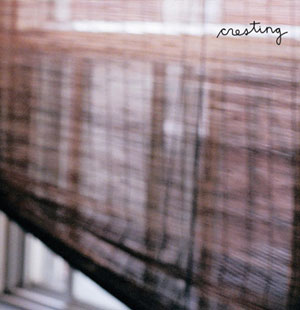
If you’ve ever taken a photograph by accident, due to either a finger slipping or someone brushing the lens away, you might not recognize the power of the shot. Not immediately, at least. Whatever that photo failed to capture doesn’t matter because it catches something else – a scene without a focal point, maybe a corner of a room – that you’d never have documented otherwise. That time-and-place nostalgia which adorns An EP’s cover-art can be found hiding within songwriter Gabriel Ng’s seven-song debut.

Similar to the work of Dirty Beaches, Cresting’s scope is measured in minutia by grabbing a certain instrument or refrain and running with it. If the tracks that comprise An EP feel less organically grown than Dirty Beaches' Bird EP, it’s in no small because Ng doctors these experiments for conflict. It works rather well. Although ‘Variation On a Variation’ battles a noisy give-and-take over its two-minutes, what fuels its progression is definitely narrative-bound. The same double-take depth applies to ‘Sprained Ankle’ which bubbles over aquatic keys like a lost b-side from Finally We Are No One. The most arresting of these sonic endeavors, ‘Squared Feet’, builds a tense piano soundscape that grows outward then dies in a moment of static.

Cresting’s motivations are secretive and designed for thoughtful listeners willing to hear songs for sounds. Having said that, the purpose of ‘Crows Call’ and its series of false starts still eludes me. A sometime difficult collection of experiments, An EP can evoke chains of memories by existing out of focus.

Monolith 1 - Omon Ra


Monolith 1

Omon Ra
Fixture Records.

SCQ Rating: 82%

Omon Ra may be another songwriting duo who record lo-fi folk songs with the occasional freak-out, but Daniel Miller and Zachary Fairbrother possess a particular X factor that distinguishes their work. It’s audible straightaway on ‘Wabbi Sabbi’ and ‘200 Miles’, an opening couplet that plays up their shaggy mid-tempo folk and softly atmospheric balladry. These songs seek no revolution; they’re undemanding without sounding the least bit conservative and their aura – what differentiates them from any band I’ve heard before – lies in the unabashed freedom inherent to these songs. The country-hued ‘Watch Me Start Fires’ and rustic ‘Don’t Be a Tack’ steer casually over the yellow-dotted line, wallowing in their own sadness while taking nimble turns toward opposing traffic.

That Monolith 1 never crashes head-on into conflict is a wise move by Omon Ra; they taunt these low-key but full arrangements to dance along the brink of despair but always know when to pull back. Jettisoning slightly is ‘Rice In a Bag On the Counter’ which borrows slightly from the Brian Jonestown Massacre’s tuneless advance but gathers steam over its expertly measured two-in-a-half minutes. Monolith 1 isn’t lacking upbeat numbers so much as suppressing them, and its optimism shines through even the longest dirge (the cusp of morning stroll that is ‘At Martinique’).

It would be easy to congratulate Fixture Records for the aura seeping through Monolith 1, given this generous re-issue that includes six bonus tracks, but it’s the performances of Omon Ra that deserves noteworthy attention. Bringing the original material to a close on ‘Simorgh’, a garage-rocker that falls comatose into distortion before rebuilding to its feel-good power-chords. As a closing track, ‘Simorgh’ is a wink that celebrates the free will Omon Ra wields over their direction. If Monolith 1 is but the first of many full-length results, we listeners have much to look forward to.

Bird EP - Dirty Beaches


Bird EP

Dirty Beaches
Fixture Records.

SCQ Rating: 67%

Recently, while waiting in line for a show, I was talking about Dirty Beaches when a friend asked what the one-man project sounded like. At a loss for easy descriptors, I started with how I really prefer movies without soundtracks but if I were to ever make a film…- But before I could finish, I realized what a pretentious twit I sounded like, even among a steady line of costumed hipsters. So I shut up. Even two weeks on, though, Bird EP instantly calls to mind the quirky soundtracks of beatnick art films that make aimless driving seem cinematic, and bohemianism into lavish incidental culture. What a film score Dirty Beaches could create.

Perpetually in slow-motion tailspin, Bird EP’s seven tracks pace the footsteps of snippets recited repeatedly until the same fractured melodies fuse into a backdrop that’s as bizarre as it is hypnotic. No arch defines or dramatizes these tracks; they all end where they began. That Dirty Beaches operates such unassuming compositions - only one of which reaches the three-minute mark - should explain why each track behaves interchangeably. The warped organs that deadpan over ‘O’Farrell’’s dirge echo in ‘North East Station’’s serene rumination. Elsewhere the loitering and bored electric piano of ‘West Coast Bird’ takes a more purposeful role in the crawling ‘Tango Tango’. None of these instrumental moments feel stitched into their respective songs, nor are they too dependent upon their confines to mess about independently. Like a student of jazz, Dirty Beaches prioritizes rhythm above all else; every other squeal or buzz is just the negative space breathing.

If Bird EP sounds languid or monotonous, you’re probably listening for familiar genre dynamics. Don’t bother. Dirty Beaches may provoke notions of dub and psychedelia at times but this release truly belongs under imaginary classifications. Indeed, like a soundtrack for your daily life should.

Didn't You 7" - Cloud Nothings


Didn’t You 7”

Cloud Nothings
Old Flame Records.

SCQ Rating: 75%

That Dylan Baldi, the mastermind behind Cloud Nothings, has Justin Bieber as his top friend on Myspace isn’t completely rooted in irony. Despite the multitude of gaffes such a comparison attracts, both young men are riding waves of hype – one of the underground nature, the other literally everywhere but – and neither knows where their successes will end. For the safer artist of the two, namely the one who isn’t being photographed with a Kardashian, Baldi’s star seems poised to continue rising with his prolific streak as this latest 7” serves his best material yet.

The raw electric guitars that brash head-first into ‘Didn’t You’ may be on the tinny side and that simple keyboard line might call to mind Los Campesinos!, but Baldi’s voice turns open-chord ruckus into unique bedroom-pop blasts. Listen closely enough and the song hints at a number of until-recently-unheralded genres (early 90s radio-rock, surf music) as well as the effortless posturing of hey-day punk. As easily addictive as ‘Didn’t You’ spills from the stereo, inexplicable B-side ‘Even If It Worked Out’ goes one further, occupying the same unstoppable noise-momentum as the previous track but with the especially biting chorus “I’m sorry we can’t be friends / my heart is overrated / I don’t like being alone / but I don’t like being with you”. Add a jangly 80s guitar to run fluently beneath and presto: near-perfect pop.

Admittedly, Cloud Nothings’ style of lo-fi anthems and compressed sonics bodes well on restricted formats like the seven-inch and I question whether Baldi could keep his thrills-per-minute quota up over a full-length. Regardless of how future-proof Cloud Nothings is, the songs on Didn’t You 7” are expressly of the present, to live your high moments by each second. The whole mood of it suggests that what comes next shouldn’t matter.

So Long, Lonesome - Poler Bear


So Long, Lonesome

Poler Bear
Independent.

SCQ Rating: 74%

The hungriest of artists evolve with the seasons, finding solace and inspiration from each turning breeze and landscape. Hand in hand with this sensitivity for change, the hungriest of artists are also prolific, bookending their trials with varied, sonic reminders. For Josh Robinson, the Saskatoon native who records as Poler Bear, one can’t help but suggest that these past several months have offered no shortage of inspiration. Released just this past February, Se Denouer communicated winter through grays; its ambience like muffled traffic, its sentiments echoed through shut-in history and film-snippets. A few months on, Poler Bear’s sophomore arrives as foretold and, sleeved in hand-stitched, original art glory, So Long, Lonesome embraces the bounty of spring.

Whereas Se Denouer took warm melodies and froze them in still-life patterns of guitar, So Long, Lonesome allows Robinson’s guitar melodies to unfurl from their rigid confines and blossom as they like. Part of this thaw can be heard in Poler Bear’s new emphasis on piano, which deepens the resonance of ‘Capucine’’s guitar rumination and twinkles like a mist over ‘Dents & Cracks’. The greater implication of a glacier-sized melt is felt in how So Long, Lonesome dwarfs its predecessor, running nearly eighty-minutes with the bonus track included. Of Poler Bear’s epic tracks (five of which breaking the ten-minute mark), ‘Mountains Like Diaphragms’ best balances his old melancholy and newfound love for longform mood pieces, tying found-sound television chatter and mournful vocals to some of the sophomore’s most minimal soundscapes. If the first three minutes of ‘The Howling Heart Is the Giant’ sounds familiar, Robinson proves himself capable of manning such mammoth arrangements by walking his pretty guitar-figure into a heavy fog that eventually rewrites the melody. It's easily one of Robinson's finest accomplishment yet.

For a record packed with such elegant nuances, it’s a shame that many are used to score the conversations of children. While I’m sure So Long, Lonesome carries a prevalence of kid’s talk with purpose – perhaps Robinson recently became a father, or maybe these songs were written in longing for the simplicities of childhood - the frequency becomes a burden on this listener. The daydream-approved ‘Capucine’ may relegate these children to a distant choral but the pretty, rain-drenched piano of ‘Fear & Trembling’ falls prey to roughly recorded snippets of an incoherent child, whining and laughing, that sour the song’s mood. By the time we get to fifth track ‘Geru Fouy’, a tremendous exercise in near-staccato guitar stutters and harmonics, we’ve already been subjected to about eighteen-minutes of fade-in-fade-out toddler-talk. And yes, ‘Geru Fouy’ continues that trend with what sounds like a Kindergarden linguistics class, their unsteady voices registering high in the mix. As with Se Denouer, these songs hint at emotional secrets beneath the sweet sorrow but as surely as Robinson’s songs invite, the constant influx of children repels focused listening.

That one glaring issue aside, this follow-up deserves focus on the strides Robinson is pacing in so short a time. While I compared Poler Bear’s former record to an early Constellation release, So Long, Lonesome sounds more akin to Temporary Residence’s roster and, to put plainly, a lo-fi Fridge album. That’s a compliment as far as I’m concerned; one earned by the dreamier tones that give colour to ‘I Call Ye Cabin Neighbors’, and the instrumental whole of ‘Geru Fouy’. Aspects of Poler Bear’s more concise material remain audible (take the thin acoustics of ‘Our Eyelids’ and the title track) but So Long Lonesome thrives when taking that half-step closer to post-rock’s romantic centre.

READ (I Found Out) - Super Visas


READ (I Found Out)

Super Visas
Independent.

SCQ Rating: 79%

No matter who you are, a newbie to independent music or an open-minded veteran, first impressions of James Hicken should elicit a fair share of scrutiny. I know my initial reaction after hearing his band Wallscenery Demos’ second effort Check This! was one of grand uncertainty, as each track that drew me in would be countered by something I instinctively held at arm’s length. Don’t let it hinder your listening though and don’t back away; you may never enjoy every song Hicken has ever written but in time his restless ambitions become familiar charms that weave through his work like elusive armour. Sticking with it also permits the great perk of catching Hicken at his focused best, which he is on Super Visas’ debut READ (I Found Out). It’s a treat you somewhat have to earn.

If the raison d’etre behind Super Visas was to draw out a balance between Hicken’s musical interests, READ (I Found Out) achieves it handily. These seven songs still contain an accommodating degree of variety, ranging from bustling indie-rock to a surprisingly effective spoken-word composition, but they’re produced in a similar, gauzy finish and sequenced to fit cozily next to one another. You can tell Hicken has roped in his immeasurable basin of ideas (as opposed to dispersing them at random) by the distant choral that grows more haunted – yet increasingly beautiful – over the prickly rhythm-guitar on ‘Anonymous Props’. That opener’s mix of warm, bleeding keys and lo-fi percussion returns on ‘Duly Noted Projections’ and the title track, the latter with Hicken’s voice rustling like a rasp of autumn leaves. When the album steers into nostalgic pools of cascading acoustics, as on ‘The Hum That Keeps Us Cool’, Hicken proves that loosening the reigns and fleshing out his songwriting ideas can result in mesmerizing, spacious tracks that give the parent album added layers of emotion.

The less-structured jams embraced near the album’s end, like ‘Get It Right’, forfeits verse/chorus predictability but not at the expense of tight focus and, after its preceding tracks, its heady grooves feel almost celebratory. Justifiably so. Super Visas lives up to the hinted genius scattered over Hicken’s other aliases and weeds out the filler for a debut that should only get more suitable as autumn comes calling.

Thursday, August 12, 2010

Check This! - Wallscenery Demos


Check This!

Wallscenery Demos
Independent.

SCQ Rating: 69%

Check This!, like a shout you hear right before something drunken and disastrous happens, is an apt title for James Hicken’s sophomore release as Wallscenery Demos. A twenty-three track opus alternating between unhinged folk explorations, fuzzed-out beats and raw instrumentals, Check This! doesn’t branch out so much as explode like a firecracker, its embers – both magnificent and inconsequential – falling without plan or harmony. Such variety makes for a garage-sale of an album but also considerably ups the odds of everyone finding a few worthy gems herein.

The first of these worthy gems, for my money, is indeed the opener, ‘I Kept It Real’, a low-key composition punched-up with fuzzed-out guitar and a fantastic psychedelic breakdown. Blurring directly into ‘[The Last Days of Heavy Metal]’, the first in a series of scattered instrumentals, and capped with the layered ‘Ain’t Got Nothin’ To Say’, Check This! struts an impressive range of songwriting throughout its first third. Half of these highlights’ value can be assessed through the delicate atmospheres Hicken wields amid his lo-fi aesthetic, like the soft nocturnal tones hovering over ‘I’m Not Around’ or menacing beneath ‘Watch Your Back’. These fine touches iron out some of the more abrasively raw moments, although ‘[One of These Days One]’, in its distorted, skeletal form, flows so perfectly you’ll wish Hicken explored the sketch beyond its thirty-second timeframe. Yep, Check This! is full of contradictions – many of them engaging, some frustrating.

Wallscenery Demos also prides itself on a chameleon-like need to swerve recklessly between levelheaded songwriting and bizarre are-you-serious buffoonery. While the record’s second half carries a few more gems (the classic-rock infused ‘They’ve Fallen Down’, ‘My Highest Regards’), they’re neighboured with some gritty beats and amp-blown distortion (‘Raw Shit’, ‘Bring That Shit Back’) that hardly sequence well together. These audacious but out-of-place tracks break what fragile cohesive hold Check This! managed over its early tracks, and distracts from Hicken’s utmost strengths. Although I appreciate Wallscenery Demos’ gauntlet for its unique blend of influences – not to mention his willingness to self-destruct – Check This! attempts too many tricks at once. Whether his upcoming 2010 record reigns those bipolar elements together or not… I can assure you that it’ll still be worth seeking out.

Friday, May 21, 2010

Bad Vibrations EP - Bad Vibrations


Bad Vibrations EP

Bad Vibrations
Brotherhood Cassettes.

SCQ Rating: 71%

I’m not so into punk. The whole objective at its root, be it rebellion or straight-out anarchy, has always seemed a more recreational than practical pursuit, possibly because most punk bands I’ve followed end up chasing their purist tails or, you know, become Blink 182. Like any genre that equates authenticity with not straying from the proven path, punk’s in-club, “punker-than-thou” rule seems quite at odds with its fight against conformity.

What I am into is Bad Vibrations. Here’s a punk-oriented band dissatisfied by the notion of treading the same lukewarm waters and unafraid to consciously show vulnerability in their relentless riffs. Here’s a trio of friends who’ve only been practicing together since last summer, who’ve taught their drummer how to play from scratch. Of course, given that this three-piece is fronted by KC Spidle, main dude of Husband & Knife and ex-drummer of Dog Day, it’s expected that this self-titled EP should dive deeper than surface-level defiance. ‘Think About Life’, in its imperative title alone, shifts our expectations with Spidle’s introverted lyrics underscoring high strings strummed like a soft siren. Is it a careful warning of things to come or narratives to unfold? Hard to say, as ‘Think About Life’ is heartily abandoned with the DIY gusto that motivates much of this EP. ‘New Danger’ supplies Bad Vibrations’ true intentions with serrated guitars and steady-as-a-freight percussion while ‘We’re Dead’ is anchored to a guitar-assault so massive, it feels epic despite its slight running-time. Even though this debut is nine tracks measuring twenty minutes, its final third is aggravated by two interruptions – a muffled, probably high-as-hell phone message, and an equally stifled conversation which clocks more time on ‘Foreigner’ than the song itself – which offer no replay value.

However rushed or hammered out these tracks might feel, the band’s impetuousness proves difficult to resist. And when these exercises in compressed energy are matched by catchy choruses, as on ‘Care About Yourself’ and ‘Good/Bad’, Bad Vibrations (rounded out by Evan Cardwell and Meg Yoshida) are a force to be reckoned with – within punk’s inner-circle and beyond it.

Thursday, April 8, 2010

New Problems - Seth Smith


New Problems

Seth Smith
Zunior.com.

SCQ Rating: 78%

Between the release of Dog Day’s Concentration last spring and their vinyl-only EP Elder Schoolhouse in autumn, singer/guitarist Seth Smith quietly unveiled his first solo album. In fact, New Problems’ existence was more coughed out as a by-the-by than “quietly unveiled”, with Smith announcing it as a “scrapbook type record of old b-sides and demos”. One’s problems must be in the eye of the beholder, however, as New Problems is far more adventurous than that recycle-bin description anticipates, sequencing idiosyncratic acoustic songs with experimental segues that create Smith’s own pirate radio signal.

Breaking down these twenty tracks and familiarizing yourself between full songs and interludes is half the fun of New Problems, as the lack of spacing between tracks blurs boundaries and groups handfuls of tracks into like-minded moods. (Being that my digital copy of New Problems is actually fused into two mp3-chunks – side 1 and side 2 of the record, respectively – my job of titling tracks correctly became unusually difficult.) Intermissions range from the brief and warped psychedelic passages of ’69’ and ‘Black Beauty’ to the melodic but secretive ‘Precious Lady’ and ‘In the Evening’ (the latter of which is such a tender highlight, I wish it had been expanded a bit); each of these providing a muddled distraction between the fully-finished songs. Smith applies a stripped-down pressure on the Dog Day-ready ‘Warm Regards’ and ‘Fish’ while retaining his post-punk tone on the near-bluesy ‘No Driver’, but the most affecting of tracks feature Smith’s more meditative songwriting. Gravitating from blown-bass to sweetened toy-box notes on ‘Nice’ is the instrumental inversion of the song’s lyrical tone, as Smith’s refrain of “I’ll give you everything you want” dissolves into “I will kill you and eat you”; two statements which are likely not one in the same. Yet the songwriter’s voice takes a more pacified role on ‘Transformer’, a beautifully understated, anti-love song.

Churning out lo-fi gems as often as rustic ruminations, the backbone of New Problems lies not in the former or latter, but in their constant convergence. The edits and sequencing which turns this odds’n’ends compilation into a bonafide album, well-planned and harmonious, deserve the gold star here. Let’s hope Smith remains as prolific in the future as the last few years have proven, and we hear a second scrapbook sometime soon.

Thursday, February 4, 2010

How the Beach Boys Sound to Those With No Feelings - Extra Happy Ghost!!!


How the Beach Boys Sound to Those With No Feelings

Extra Happy Ghost!!!
Saved By Radio Records.

SCQ Rating: 74%

“If you like moody, lo-fi, kitchen recordings - it just might be for you,” claims a press statement for How the Beach Boys Sound to Those With No Feelings, and it’s about as honest an overarching quote about this record can get. These songs feel welded together of spare parts much like how Extra Happy Ghost!!!’s instruments sound built from scratch; half-tuned guitars and retro casios riff and squiggle through the record’s negative space while vocalist/multi-instrumentalist Matthew Swann ponders the dark alleys of consciousness and suburban misery. Truly, the screws sound ready to fall out at any moment and some of this EP’s best moments thrive from that anticipation.

Coming off like an impromptu jam session in your friend’s kitchen at 4am, How the Beach Boys Sound…, through false starts and broken riffs, depicts a group of musicians unafraid to fuck up in the search for meaningful songwriting. In fact, a promising song like ‘J and 3K’ seems to invite the ethos that what’s easy isn’t worth repeating, as Swann and co. (Joel Nye on drums, Lorrie Matheson on “special sounds”) channel a sweetly disarming acoustic song into dissonant madness then cut as if their 8 track collapsed. Right there in that minute-plus opener, Extra Happy Ghost!!! set the stage for what’s to come: an unpredictable assortment of sparsely psychedelic jams (‘These Are the Facts in an Endless Regress’) and acoustic experiments gone haywire (‘Sympathy for the Moron’). What prevents this EP from becoming a mismanaged hodgepodge is Swann’s singular vision, which utilizes brash noise in memorable, tight instances and approaches a few tracks without the desire for self-sabotage. ‘Mash-up: Neither Being Nor Nothingness’ strikes a steady groove of guitar and spritely percussion while ‘Hot Time Sartre in the City’ rises to a ear-pleasing climax of well-executed key codas under rabid distortion.

What is arguably among the most commendable things about How the Beach Boys Sound to Those With No Feelings is that it doesn’t call to mind any recognizable influence, lo-fi or otherwise, besides perhaps the Beach Boys. In the title track, Extra Happy Ghost!!!, while burying their muse’s sunny chorus in sullen irony, strike sonic gold, finding the perfect mix of unassuming vocals harmonized in echoes, organs swallowed by low-end guitar licks and muffled ambience to truly call their own. Fittingly, it’s the last song that acts as the culmination for all of How the Beach Boys Sound…’s wayward blessings, and the wall-of-sound style I could see Extra Happy Ghost!!! running with. Or at the very least, it’s that jam-band moment where everyone falls into place, nails their individual parts, then calls it a night because they know a high note when they hear one.

Wednesday, January 6, 2010

A Brief Affair of Limping and Gathering of Clipped Wings - Kram Ran


A Brief Affair of Limping and Gathering of Clipped Wings

Kram Ran
IT3 Records.

SCQ Rating: 68%

Due to a last-minute venue switch, I closely followed several message boards - each clamoring to make sense of a chaotic situation – to find out directions, door-times, ticket prices and whether this Former Ghosts show was really going to happen. When I checked for an update moments before leaving, I read that Kram Ran had volunteered to play an impromptu acoustic set to open the evening. I’d never heard of Kram Ran before and I wasn’t alone; standing between strangers during his gig, I could tell by the glances of shy hipsters, the body language of those shifting weight in the front, that most people didn’t know what to make of this guy. As he warbled and wailed and attacked his guitar with offbeat slaps, I realized that these onlookers weren’t bored or purposefully being passive-aggressive… they were slightly uncomfortable. Kram Ran's performance was so insular and moody, its intensity made people awkward. Now there's a power that shouldn't be undersold.

A Brief Affair of Limping and Gathering of Clipped Wings, released in August of this year, does an adequate job of capturing Mark Wohlgemuth’s off-kilter antics while presenting a powerful songwriter at work. Combining these disparaging sides of Kram Ran – the goofy and the gorgeous – is a give and take, as they often show up in the same song. Despite the layered drones and tape recordings that commence ‘A Death & Kill’ in a far-off haze, the opener is suddenly diluted to a plucky piano repetition, where Kram Ran’s vocals first reveal themselves like Alec Ounsworth if the Clap Your Hands Say Yeah vocalist was impersonating an elderly woman. It should be noted at this stage that those aren’t his natural vocals so much as one of many left-field WTFs chosen to either sidetrack or sabotage his efforts. ‘To Dance With You Dear Dread’ is a better representative of his distorted wail; unhinged, gloriously off-key, and lost in that song’s squall of harsh dissonance that winds down to some beautiful, sparse keys. Kram Ran’s duality is again hurdled on ‘Limping Through the Snows of Kilimanjaro’, where Wohlgemuth’s stream-of-conscious curses over crunchy beats and coked-out synths are slowed to a glacial pace of haunting beauty.

The second, less abrasive half of A Brief Affair… finds Kram Ran settling into subtle electronic compositions and resigned vocals that better showcase his focus, as if the earlier panic attacks have given way to an exhaust but clear afterglow. With dripping and tapping percussion, ‘The Trial’ arches into a melodramatic climax whereby the lyric’s ticking clocks and split bodies are explained through the violence of gauzy synths and ravenous vocals. It’s the last outburst on A Brief Affair…, leaving closer ‘Kill Then Give’ to present Kram Ran’s best focus yet. Matching vaguely IDM-inspired loops to lilting acoustics and restrained vocals, ‘Kill Then Give’ creates a landscape of its slowly shaping melancholy, wandering sparse valleys and distorted peaks to a contemplative close. Wohlgemuth may have played this track live - it’s hard to be sure - but the highlights on A Brief Affair of Limping and Gathering of Clipped Wings suggest a potent artist for Canada’s New Weird, building genre-mashed narratives with a fatalistic flair.

Cold Toads - Friendo


Cold Toads

Friendo
Bart Records / Myspace

SCQ Rating: 75%

My first listen to Cold Toads instinctively brought to mind slow walks from crowded school buses and trying to find a natural stride along cold backstreets, snowtops crowding the curbs. It’s like I’m in middle-school again, pretending to understand Pearl Jam and Nirvana while at school but once I was off the bus, my old Panasonic Shockwave was rocking homemade mixes by local Sonic Unyon artists like The New Grand and early Treble Charger. Hearing the sounds of true Canadian indie should probably bring me back to those ever-so-awkward, early teens but, instead, Friendo reestablishes the feel of winter-sick, Canadian basement recordings that I can now fully appreciate.

Moreover, a record like Cold Toads is a rare find as it manages to satiate my love of American Analog Set and early Sonic Youth all at once. The basic set-up (Henry on drums, Michael on guitar/vocals and Nicole on guitar/vocals) provides a mellow DIY aesthetic reminiscent of that defunct Texan group’s home-recorded work, which turns tracks like ‘Liner’ and ‘Callers’ into pure comfort music. In my opinion, this Calgary-based trio could’ve wandered into the sunset with such a laid-back sound but Friendo ain’t no one-trick pony. Mixing their lo-fi rock with an art-rock approach to dissonance, Cold Toads baby-steps further from my ideal lounge-about-the-couch-on-Saturday-night music with each successive track, and becomes a statement of intent. From the breezy tempo and de-tuned guitar noodling that evokes - but should hardly be restricted to - Sonic Youth, ‘Oversees’ carries a casual momentum that opens into distorted bliss while ‘Sibley’ finds the trio falling through that rabbit hole with heavier percussion and inaudible, across-the-room vocals. Brief and contained like a case of momentary insanity, Friendo resume composure for perhaps the best track, ‘Young Fellows’ which combines their implausible influences into something raw yet well-rounded. Allowing their heavier side to rumble loomingly along its fringes, Friendo commit memorable vocal hooks and some rather heroic guitar chords to ‘Young Fellows’, ending the mini-album on a high note.

Discovering Friendo takes on additional coolness when considering how bloody hard they are to find. Working exclusively with the cassette format (on that note, check out how ‘Hailey-Omen’ knowingly cuts in and out like a mixtape you’ve recorded over a thousand times), Cold Toads is making me long for the days when I had that Panasonic Shockwave clipped embarrassingly to my belt. On second thought, maybe I’ll stick to the MP3 code it comes with after all…

Thursday, August 13, 2009

Post-Nothing - Japandroids


Post-Nothing

Japandroids
Unfamiliar Records.

SCQ Rating: 80%

There will come a day we won’t care. We won’t want to get off the subway at our particular stop, we won’t want to check and respond to our emails. Our job won’t be worth the trauma, a casual patio beer just won’t be enough. There will come a day we call in sick for funerals that don’t exist, we’ll let our twitter-followers balk at our lack of updates. We’ll quit our jobs without a contingency plan and we’ll crack beers and dial friends as the sun comes up. And on those days, my friends, you’ll want to hear Post-Nothing. You’ll ache to have its shredded production rattle your skull, it’s boisterous curiousity bouncing off your apartment walls. You’ll want to watch the record spin over your hand-me-down turntable, hearing fully with your heart and not your brain.

Too contagious for hyperbole yet too thrilling for silence, Post-Nothing is pure id, embodying the cause-and-effect basics we all inherently try to disguise. Try to ignore the rapid-fire drum-rolls and distorted thrash of ‘The Boys Are Leaving Town’, the cymbal-crashing marathon of ‘Sovereignty’, the wild vocals of ‘Young Hearts Spark Fire’ that scream “We used to dream, now we worry about dying.” Is the latest from Japandroids truly post-nothing? Not in any genre-creating, generational-dividing way. Yet these songs deal exclusively in the present, in creating that feeling - however momentary - that every moment is your chance to break routine and do something entirely irresponsible. It’s a thirty-five minute release that feels entirely consequence-free, tailor-made for days of hedonism and, indeed, post-nothing.

Yet what makes this record more than some escapist’s reprieve is that, all those “heart sweats” aside, Post-Nothing has a cerebral side. Consider that ‘Crazy/Forever’, a song that in two words sums up all my aforementioned Freudian VS establishment rhetoric, finds the Vancouver duo pacing between bar-band and runaway romantics, swapping their classic-rock chords for summery, lo-fi pop. Or listen closely to how ‘I Quit Girls’ takes a touching three-chords - that, OK, were completely ripped off Smashing Pumpkin’s ‘Mayonnaise’ – dirties them up in a way that should be completely unlistenable, and throws a thundering drum track to fill the chord-cracks at the three minute mark. By the time Brian is singing “after her, I quit girls”, one would think the room would be cleared, yet ‘I Quit Girls’ is phenomenal, showing another dimension to the Japandroids’ primitive set-up. Gorgeous and ugly in equal measure, Post-Nothing treads a tightrope between melody and noise, structure and impulse, glory and depravity. There will come a day we won’t listen to Japandroids. But we’ll still be jealous of them.

Sunday, May 10, 2009

Years (By One Thousand Fingertips) - Attack in Black


Years (By One Thousand Fingertips)

Attack in Black
Dinealone Records.

SCQ Rating: 85%

About thirteen months ago my prejudices against Attack in Black suffered a major setback at the hands of The Curve of the Earth; a vinyl-only excursion into four-track folk songs recorded over two days in their hometown of Welland Ontario. My review of said album coarsely explored the admiration and hesitation I was struggling to decide between, and while that recording has indeed survived the test of time, I treated Attack in Black like any hung jury would: with suspicion. I mean, if that wonderful vinyl was simply some playful aside before indulging further in radio-rock’s bland flavour-of-the-month contest, SCQ wasn’t about to jump the gun and celebrate The Curve of the Earth as the dawning of a fresh, new Canadian talent. With the release of Years (By One Thousand Fingertips), I can do just that.

For those of you curious about Attack in Black’s current frame of mind, be it Marriage’s ferocious punk-rock or more aforementioned lo-fi folk, Years carries the latter’s approach but largely splits the difference. ‘Leaving Your Death in a Flowerbed’ awakens from the band’s slow slumber (a pretty stillness since 2007’s aggressive debut) and displays their new approach brilliantly; the guitars are revved with ample distortion, their vocals calm but emotive nonetheless. Despite lacking high-tech studio wizardry or audio-pyrotechnics, Attack in Black have presence… and their disinterest in polishing the package makes the results all the more engaging. Renewed energy is peppered throughout the record, as on the electric crunch of ‘Birmingham’ or the irresistible rock-hooks of ‘I’m a Rock’. While these upbeat compositions lack the predictable punk-isms of the 00’s – namely attitude and a fair share of screaming – I credit Years with a true punk flair. Rarely has a band purposefully derailed their high-profile potential to record their songs their way (issuing a vinyl-only album mere months after their debut, choosing to create a home-based studio and man production efforts themselves). Instead of becoming the next Can-rock bubble band, Attack in Black sound closer to the next cult classic; adventurous, messy, non-committal, chameleon-ish and yet wholly Canadian.

When they aren’t performing electric-tinged rock tunes, Years revels in the band’s well-honed acoustic side. As The Curve of the Earth presented several shades of grey, imbedding their tunes with tones of optimism, dread or numbness, Years’ slower material flourishes over broad emotional territories. ‘I Could Turn’ starts with a jangling guitar-line for late-night wandering and a collapsing drum-pattern, before building into a loser-anthem of fleeting confidence while ‘Messenger Bird’ is a gorgeous piano ode to perseverance that recalls After the Goldrush era Neil Young. ‘The Surface I Would Travel’ closes the disc with subdued vocal harmonies, tastefully intimate bass and some echo/feedback-induced experimentation, leaving the listener in a romantic haze.

At a hefty sixteen tracks, Years is bound and fortified by its variety and while a few tracks could’ve arguably hit the editing room floor, I prefer its current manifestation. Coupled with The Curve of the Earth, Attack in Black are creating albums singular through their own trademarks; between-song experimenting, rustic instrumentation, and songwriting that suits its brave production. Years (By One Thousand Fingertips) is emotionally complicated, creatively loaded and beautifully packaged… Attack in Black’s first minor classic.

Wednesday, February 11, 2009

Lost Wisdom - Mount Eerie


Lost Wisdom

Mount Eerie
P.W. Elverum & Sun Records.

SCQ Rating: 63%

Phil Elverum’s songwriting has always maintained a faint grip on early 70s folk ideology, where the hippie-metaphors and flower-power muses were left for dead and instead replaced with introspective bouts of clarity. Much of Elverum’s best work (the Microphones’ The Glow Part 2 or the Mount Eerie EP) dealt closely with his childhood but was smartly universalized by making himself a character in a work of imaginative fiction. Five years later, Lost Wisdom retains the skeleton of his cherished fables but finds Elverum closer to ever to that early 70s introspection. Dark, brooding guitars meander over the weak hiss of these ten home-recordings that find Mount Eerie better prepped for vinyl than ever before. Julie Doiron and Fred Squires guest.

Entirely acoustic and performed by guitar and voice alone, Lost Wisdom continually flirts with monotony over its quaint twenty-three minute running-time. Songs like ‘Voice in Headphones’ and ‘You Swan, Go On’ are needed respites from Elverum’s self-seriousness, but too few tracks here deviate the isolated tone pushed by ‘If We Knew’ or ‘Grave Robbers’. As brief as Lost Wisdom is, I’m still left a bit stir-crazy from being inside Elverum’s lo-fi mind for so long. If only he closed the disc with a righteous track of confident rebuttal to all his unrequited longings that, like the front image of a cabin burning to the ground, would’ve rendered his claustrophobic introspection worth undertaking.