Showing posts with label Indie Rock. Show all posts

Friday, March 11, 2011

Total Life Forever - Foals (No Ripcord Review)


Total Life Forever

Foals
Sub Pop Records.

No Ripcord Rating: 8/10
SCQ Rating: 85%

I’ve never heard Antidotes in full and, as it turns out, I don’t need to. For all intents and purposes of this review, that 2008 record may as well not exist since I’m not even going to blather about contrast and how its brass-addled, white-boy funk has been discarded this go around. It hasn’t. Upsetting as this may be to fans that sleep with a copy of Antidotes under their pillows, the album’s most memorable attribute is that even Foals didn’t care for it, at first shuffling Dave Sitek’s production efforts under the rug before outright dismissing it during recent press circuits. Another strike against Antidotes’ presence is that Total Life Forever essentially guards that same white-boy funk, less angular but increasingly dance-ready.

If there’s one hidden impression worth taking from the “controversy” surrounding Antidotes, it’s that Foals set their bar rather high. They were courageous enough to follow their ideals by shelving Sitek’s production and they’re serious enough about evolving to openly simplify their sound. That discipline shows on the surprisingly conventional Total Life Forever, which forsakes much of their earlier chin-scratching artiness for trendier dance-rock rhythms. Whatever the band’s intentions, you can’t fault opener 'Blue Blood' for appealing to a wider audience when its bouncing bass and crisp guitar chimes radiantly over Yannis Philippakis’ heartfelt vocals. Alternating between dewy atmospherics and guitar tones so brittle they border on electronic, tracks like 'After Glow' and 'Alabaster' make-up the general trajectory of Foals’ songwriting by rising to a percussive climax. Whether inspired by funky outbursts or frenetic emotions, Foals seem to be drawing more directly from the NME’s recent graduate class, utilizing the earnestness of Bloc Party and the soaring choruses of Friendly Fires as a template. That these newfound similarities with other successful British indie acts unveil themselves naturally amid Foals’ own idiosyncrasies is no fluke, rather proof that these lads are capable of far more than simply fitting in.

Considering the determination Foals have already shown over their young discography, it’s possible that this record could just be flexing their pop muscles. Yet Total Life Forever’s knack for dance-rock is so infectious and eager-to-please, it‘s almost troubling. Outside of the odd instrumental ('Fugue') or flirtation with excess ('Spanish Sahara'), the record seems hypnotized by its strict formula of repetitive choruses and building intensity until the final two tracks, 'Two Trees' and 'What Remains', remind what a compelling voice Foals can offer the Brit-rock universe. Beautifully ethereal yet firmly rooted in careful dynamics, these distinct, late highlights should serve as a wake-up call suggesting that by blindly embracing pop structures, Foals are weighing appeal against integrity. The difference? Integrity lasts much longer.

This review was originally published on No Ripcord...

Pot Calls Kettle Black - Small Sins


Pot Calls Kettle Black

Small Sins
Arts & Crafts Records.

SCQ Rating: 75%

It’s hard to forget Small Sins evolved from The Ladies and Gentleman, even if you never heard that mid-2000s band in the first place. Between his regularly updated website and promotional writing around the release of Pot Calls Kettle Black, Thomas D’Arcy still seems caught in the aftermath of The Ladies and Gentlemen’s demise and calls the past two years of public inactivity his “dark period”. Not one to shy away from his emotions, D’Arcy has integrated them as undercurrents for his latest electro-pop collection, Pot Calls Kettle Black.

From the lush opening of strings and soft bass, D’Arcy’s title track professes a major ace up its sleeve: producer John McEntire (of Tortoise and Broken Social Scene fame), who adds a certain sheen over these tracks. The choice of producer suits the utilitarian strengths of D’Arcy’s songwriting, leading to little songs that feel embossed with glossy finishes. Quaint confessions get magnified in the moody arrangement of ‘My Dear’ until it sounds like a Death Cab for Cutie song and ‘Tonight’ works no differently, its resignations blown up with ivory cascades and a pounding drum-machine. If you hadn't guessed amid all of these band-comparisons, D’Arcy’s voice (as both songwriter and vocalist) fits snugly into pre-worn song-structures and McEntire takes advantage with stylish arrangements that speak pop from different indie-genres. The electronic leanings of ‘Never Again’ evoke the perky undertones of Junior Boys while ‘Where There’s Gold’ gives melancholy a widescreen swoon similar to The Go Find.

“We won’t try to sugar-coat it,” D’Arcy incites during ‘Tonight’ but the full orchestral flourishes behind him say otherwise, and the record thrives off of its contrast between songwriter and producer. Whether that sense of irony is why it’s called Pot Calls Kettle Black in the first place, I don’t know, but Small Sins should finally worm its way out of D’Arcy’s past with such satisfying results.

Pete Yorn - Pete Yorn


Pete Yorn

Pete Yorn
Vagrant Records.

SCQ Rating: 78%

“I think I’ve never been in love,” Pete Yorn confesses on ‘Stronger Than’, but it’s a sentiment his fans have long taken for granted. Over his previous four non-Johansson-ized LPs, Yorn's songbook has largely spoken of love in the pretense of its demise - of its shrugging, incapable squandering. And maybe that’s why 2009’s Back and Fourth soured many fans; its full-length scope of being a lonely dude, with shiny but lethargic production by Mike Mogis, lacked the thick-skinned tempos that once gave Yorn’s emptiness some nomadic purpose.

That punch has thankfully been restored on Pete Yorn, a rag-tag assemblage of eleven cuts Yorn and Frank Black (yes, of the Pixies) punched out over five days in Nowhere, Midwest America. From the searing guitar and pounding, no-frills drums of ‘Precious Stone’, Black’s raw production evokes the immediacy of hearing a garage-band in the flesh; the primitive relationship between guitar and percussion standing naked at the forefront of the mix. And Yorn, despite a nagging fever that permeated the majority of recording, revels in the grain of his fractured voice-box, embracing tuneless emoting on the cathartic crest of ‘Sans Fear’ and seething throughout ‘Paradise Cove I’.

To a Yorn-uninformed listener, this self-titled affair might sound like a 90s alt-rock retread – and, in the case of the power-chord driven ‘Always’, it sadly is – but Pete’s taking chances here. Shedding the thick production that protected him for bare-boned testosterone didn’t sound like a winning strategy for the songwriter who made his name with a layered, folky approach, but Yorn’s vocal risks empower some otherwise flimsy tracks (‘Badman’) into a fist-pumping good time. Yorn may not have learned a whole lot about love, but he’s ready to fight for it again. And Pete Yorn is a good fight, indeed.

Things Luminous EP - Crush Buildings


Things Luminous EP

Crush Buildings
Rifle Eyes Records/Bandcamp.

SCQ Rating: 76%

With all of our possessions loaded into a U-haul truck, we pulled into Ottawa one night in late December looking to breathe fresh air after two years of Toronto smog. Mapping our way through its snow-covered downtown streets, I was also hungry to explore Ottawa’s local independent scene… something that, eleven months later, I’m still trying to locate the boundaries of. Thankfully the first band I’ve grabbed onto happens to be, in hindsight, one of our capital’s most promising; Crush Buildings refuses to be pinned to a particular music-tag and their recent EP vindicates this refusal to narrow their sights.

Although ‘Blueteeth’ and ‘Swinging the Lantern’ offer complex indie-rock compositions that deviate tempos and wallow in rich instrumentation, they’re just one side of Things Luminous EP’s understated tour de force. Electronic textures drift ‘The Minutes’ in a shoegaze direction that nevertheless fails to plateau the band’s creativity, as their euphoric slowdown at the bridge manages to deepen the track’s emotional core. Crush Buildings avoid jumping so far out of their comfort zones that they hinder their EP’s scope, thereby smartly leaving ‘The Minutes’ a spacey centerpiece around two couplets of original indie-rock. Rarely can a band – especially one this young – convey so much passion into a twenty-minute EP, but Crush Buildings’ songwriting affords that maturity. It’s anyone’s guess where the band will go from this point but one thing’s for sure: Ottawa could use far more records as unique as Things Luminous.

Song Islands Vol. 2 - Mount Eerie


Song Islands Vol. 2

Mount Eerie
Phil Elverum and Sun, Ltd.

SCQ Rating: 64%

“Seriously?” Yep, that’s how I first responded to the very existence of Song Islands Vol. 2. Don’t get me wrong: Phil Elverum’s discography displays, if nothing else, how ‘prolific’ should be done, by assembling projects borne of personal heritage (Mount Eerie’s childhood fantasy) or social circumstance (Lost Wisdom's communal sessions with Julie Doiron and Fred Squire) and churning out sudden explorations into vastly new sonic terrains (Wind Poem’s metal affinity). And my disbelief over Song Islands Vol. 2’s premise doesn’t even rest at the seeming impossibility of gathering spare parts from those wildly different releases and cramming them together... although, let’s face it, that’s a concern. My disbelief instead stems from Elverum’s chosen tracklisting, which features an ungodly thirty-one songs all courtesy of someone who has already put out seven releases since 2008.

And then ‘Where?’ begins, a half-finished song full of Elverum’s familiar tape-hiss and multi-tracked murmurings, and I’ve already forgiven him. Despite Mount Eerie’s tireless parade of EPs, LPs, CD-books and 12”s over the past half-decade, the magic that first instilled early Microphones work with his personal, lo-fi oddness still sounds fresh today. Even amid the India-indebted ‘The Intimacy’ which overlays eastern rhythms with a beautiful collage of harmonics, the first, er, one-sixth of Song Islands speaks like an average (meaning peculiar) Mount Eerie release. Maintaining any sort of LP arch goes out the window with the trash-thrash of ‘instrumental’ and the isolated vocal-tracks from Lost Wisdom’s ‘Voice In Headphones’ and, although each of these leftovers offer a glimpse into moments of Mount Eerie’s back-catalog, there’s enough quality material here to warrant a thematically tighter collection of fifteen key tracks. The improvised strums of ‘Cold Mountain’s Song #286’ evoke Elverum’s rustic sensibilities so well, it could’ve tied swimmingly into ‘Grave Robbers’ or stretched into the more adventurous ‘Calf In Pasture’.

Yes, it’s difficult to resist the urge to re-sequence and, in a way, validate these many highlights from Elverum’s intended hodgepodge. Playing out like a restless retread of ideas that hovered above, if never settling upon, Mount Eerie’s previous entries, these seventy-odd minutes deliver the intermittent case of déjà vu here and there. Elverum’s aura may swerve this raw bulk of recordings from feeling like a gutter-scraping cash-grap but Song Islands Vol. 2 would’ve been far more approachable had Elverum not treated it like a waste-bin for everything lying around.

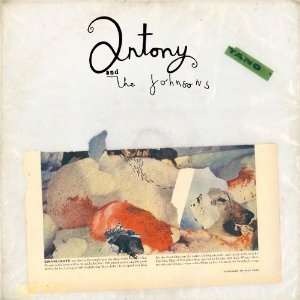
Swanlights - Antony & the Johnsons


Swanlights

Antony & the Johnsons
Secretly Canadian Records.

SCQ Rating: 88%

During his interviews promoting The Crying Light last year, Antony Hegarty admitted his approach to the studio process wasn’t nearly as accomplished as his live approach, and that he was hoping to better translate his recorded work. Such a humble stance on his previous albums comes as an obvious surprise to anyone who has heard the brilliant I Am a Bird Now or The Crying Light, but those perceived shortcomings actually gather some veracity over the adventurous bent of Swanlights, a record that wipes clean Hegarty’s conflicts with identity, if not the environment around him.

Inner peace aside, Swanlights doesn’t quite fill the shadows of the group's Mercury Prize-winning 2005 effort but the stakes here aren’t nearly as dramatic to begin with. Hegarty has fully embraced the romantic side that flourished up on The Crying Light (think ‘Kiss My Name’) but placates those convictions beneath challenging song-structures. No longer do Antony and the Johnsons’ songs line up as stoic pillars, either chocked-full or drained thin of emotion like the sharp contrast of their records’ black and white cover-art. Tracks like ‘I’m In Love’, with its oscillating organ, and ‘The Great White Ocean’ purposefully lack centers, choosing instead to unfurl without the pressure to build up or break down in linear fashion. Match this patient plateau of a template with some of the band’s most technicolor arrangements to date, and Swanlights offers a clean break from the melodrama of the band’s past efforts.

Hegarty admits as much on ‘Everything Is New’, a soft ensemble of piano, strings and cymbals that collectively paint the repeated phrase of its title as both wondrous and anxiety-ridden. The orchestration (assisted in part by Nico Muhly) roams freely over Swanlights, at times bleeding through song-boundaries and reducing individual tracks into a succession of ebbs and flows. ‘Violetta’, although a mere thirty-six seconds long, preludes the experimental title track well, whereas ‘Salt Silver Oxygen’ and ‘Christina’s Farm’ couple into a beautifully brooding finale. Only single ‘Thank You For Your Love’ circles back to Hegarty’s austere back catalog, yet even it feels imbued with its share of bliss. Having escaped the chiaroscuro shades of more troubling times, Hegarty has mastered the studio process with Swanlights, offering a bountiful palette where everything is, if not entirely new, certainly in bloom.

Ghost Blonde - No Joy


Ghost Blonde

No Joy
Mexican Summer Records.

SCQ Rating: 82%

The ease with which No Joy operate, as a thrashing punk duo bathing in early 90s sonics, belies the durability of their craft. For one thing, there’s enough sweltering feedback here to fuel a thousand attitude-based rock clichés or, equally, the misconception that Laura Lloyd and Jasamine White’s focus settles somewhere in the tall grass of their shoegaze surface. Ghost Blonde proves those assumptions false, its linear pursuits merely a trapdoor to trip listeners into a fuzz-laden cosmos of songs seemingly rapid-paced and drifting all at once.

That tempo paradox is the great hinge in No Joy’s songwriting machine; offsetting their punk-laced guitar stabs with reflective textures and ethereal vocals which blur along a chord’s creases, Lloyd and White support their scathing performances with a delicate, natural ambience. Fed by lush vocal tones and rough guitar-work, ‘Maggie Says I Love You’ ideally captures that nexus between raw musicianship and sound-exploration. All of Ghost Blonde features that execution of melodic punk through soft lens, trimming the guitar of ‘Heedless’ to a blunt rumbling or affixing some echo to the swirling ‘Indigo Child’. None of their clever doctoring is unique in and of itself, perhaps, but No Joy somehow manage to imbed these slow-blooming layers without dulling their riffs. This debut’s thick production, instead of feeling murky, actually extends the daydream qualities of songs like ‘Pacific Pride’ or the title track, where a heavier hand would’ve lost the rhythmic backbone pushing things forward so swimmingly.

Mind you, the whole record would sound like a static wash over a pair of tinny computer speakers - and that’s fair warning for anyone expecting Ghost Blonde to deal in brash dynamics. What’s dramatic and enchanting and oh-so-replayable about No Joy’s scene is its introverted nature slowly revealed; those private triumphs best complimented while strolling through November by one’s lonesome, and defiantly lonesome. Sure, Ghost Blonde's crowning moments feel sustained by a woman’s touch but they're razor-sharp enough to simultaneously question what the hell that even means anymore.

Steel City Trawler - Luke Doucet & the White Falcon


Steel City Trawler

Luke Doucet & the White Falcon
Six Shooter Records.

SCQ Rating: 73%

“It’s strange,” Doucet admitted in a recent interview with Canada.com. “I still sometimes wake up and go: ‘How the fuck did I end up in Hamilton?’” Now there’s a sentiment I can immediately relate to, having lived my own spontaneous, month-by-month existence in our nation’s notorious Steel Town. Sometimes it’s easier to question my time in Hamilton than to remember the reasons that delivered me, no differently than how its garish cityscape of industrial towers and thick smog disguise the many charms that lay just beyond view. Steel Town Trawler, a joint project between Toronto ex-pat Luke Doucet and cartoonist David Collier, embraces this conflicted romance with Hamilton through blue-collar tunes and a comic protagonist who’s battling to find sanctuary in a troubled town.

For the musical end of Steel Town Trawler, Luke Doucet carves expert impressions into songs of the Hamilton experience. Borrowing from the classic-rock riffs that continue to terrorize the working-man’s radio (y’know: Bachman Turner Overdrive, Ted Nugent, etc.), ‘Love and a Steady Hand’ boasts some familiar percussive prowess (courtesy of Sloan’s Andrew Scott, who produces) whereas anthem-for-a-girl ‘Dirty, Dirty Blonde’ swaggers like a minor summer hit. Doucet’s artistic longing joins the greater proletarian anguish, glorifying the underappreciated on ‘Thinking People’ and empathizing their hardworking principles over the thorny blues-rock of ‘You Gotta Get It’. “Everything I own I slaved for it / and everywhere I been I traveled so far / everyone I love they love me in turn / and every time I crash I burn,” Doucet intones, and his gritty musicianship meets the muse head-on. The White Falcon’s guitar-licks can border on raunchy and Doucet’s lyrics can show vulnerability – sometimes, as shown by ‘Hey Now’, on the same track – but Steel City Trawler rarely drifts too far from its Can-con centre-of-gravity. In the odd case of 'The Ballad of Ian Curtis' (replete with new-wave leanings), it’s an unexpected, unprovoked delight.

David Collier’s graphic novella, bundled and doubling as a lyrics-book, is equally enjoyable to rummage through, capturing the city’s downtrodden feel while investigating some of its beautiful escapes. As with Collier’s chronicle Hamilton Sketchbook, his new tale Lo in Steel City documents the artistic struggle for integrity and, of course, financial survival within Hamilton’s downtown core. Corporate buildings hang “for lease” signs and filth litters the crowded streets. And yet there’s a field where the city dump once was, the Bruce Trail on Hamilton Mountain, and a selection of great music-buying locations (Cheapies and, my favourite, Dr. Disc). Steel Town Trawler is an album full of fun and familiar rock-and-roll jams but it’s Doucet’s subject matter that elevates this record beyond commonplace classic-rock fodder.

Public Strain - Women


Public Strain

Women
Flemish Eye Records.

SCQ Rating: 86%

Pretention is a matter of dates. Those who argue between worthy innovation and been-there bullshit are slipping down a subjective wash, divided by musical knowledge and general preferences. About two weeks ago, a showdown concerning pretention kicked up on No Ripcord over its review of Public Strain, Women’s sophomore album, which was described as “auditory maliciousness”. Yet for a record with such a comprehensive blueprint for divisiveness, it’s strange that Public Strain’s relationship to lo-fi – a focus-point in many of the readers’ colorful comments – lies at the center of debate. Unlike the contest between innovation and pretention, there’s a tangible difference separating orchestration from noise, premeditation from experimentation.

Treat ‘Can’t You See’ as the debate’s official litmus test: if all you hear over the course of the opener’s three-minutes and forty-one seconds is off-key screeching and plodding bass, well, nobody should argue that this record isn’t for you. For the rest of us: yes, Public Strain has lo-fi’s elusiveness but only as a playful tool to position these songs within earshot or frustratingly beyond. The argued-over ‘Penal Colony’ ascribes to similar subdued effects first heard in ‘Can’t You See’, but feels warm and aquatic as if Jim O’Rourke had taken over sound-duties. Instead it’s Chad VanGaalen behind the boards, stretching strings, laying down warm keys and recording some of Women’s most pristine rock jams. Whether you buy into VanGaalen’s blizzard of drones or not, the merits of lo-fi needn’t come up; there isn’t any four-track tape-hiss or untrained static being wielded here.

Speaking of O'Rourke: Sonic Youth must love this album, and not because the two bands share lo-fi as an icebreaker. Women’s songwriting compliments the Thurston Moore-led outfit’s exceptional approach to pop music, rebuilding the genre’s foundations with scathing arrangements that would sound self-hating to most pop purists. Bass-driven grooves cement ‘Narrow With the Hall’ and vicious call-and-answer guitar-spikes surf ‘China Steps’ to a calming resolution, showing Public Strain’s considerable thaw; one that pierces VanGaalen’s desolate atmospheres with rays of clearheaded (but still rightly soggy) pop sensibilities. None of these sonic parallels tread on Sonic Youth’s history in the least and yet elements of this uneven, patience-testing sophomore by Women strike mirrored threads of genius that pepper E.V.O.L. or even Sister.

Some hooks are nearly inaudible, but their set-up and repetitions are felt in tiny collisions, as how the bass and guitar finish each other’s thoughts in ‘Heat Distraction’. Otherwise it’s the deceiving nature of Public Strain’s negative space that transforms these initially underwhelming valleys (‘Can’t You See’, ‘Penal Colony’) into wondrous slow moments which, through no accident, reveal their faults as charms we’d never really considered before. In some cases, listeners may require closing highlight ‘Eyesore’ to put all of Public Strain’s wayward instrumentation into perspective. There is a slight learning-curve here. Even in the presence of ‘Drag Open’ and its tremendous ferocity, I acknowledge that the punk-as-fuck DIY spirit can only bring you so far. Teamed with VanGaalen, Women have transgressed lo-fi for the greater good, delivering one of the year’s most quietly affecting indie-rock records.

In Evening Air - Future Islands


In Evening Air

Future Islands
Thrill Jockey Records.

SCQ Rating: 87%

Post-punk, to me, is premiere party-music. It launches out of the gate with a bass-heavy groove full of tension and uncertainty, then rides that momentum with deviations – some subtle, some grandiose – in a pattern that elicits a fully present hypnosis. New Order, Cocteau Twins; any genre that creates enough elbow-room for these two acts deserves acquisitions like Future Islands, a band capable of cutting performances and swoon-ready tempos. With a record so capably catering to very different circles, as both a party record and a break-up soundtrack, In Evening Air’s most unfamiliar association is its label, Thrill Jockey, more commonly known for structural experimentation than heart-pounding love-letters.

Future Islands’ core sound, on the other hand, feels familiar; maybe it’s the way vocalist Samuel Herring’s enunciation recalls a tortured Torquil Campbell of Stars, or perhaps it’s how the band’s take on post-punk extends beyond the tight confines of minimal synth into something scarier and more satisfying. ‘Long Flight’, which incorporates samples from the STS-1 shuttle launch, uses that discord as a dirge to alter the tempo perceived by its spritely percussion. ‘An Apology’ stretches those smoke-and-mirrors further, letting programmed drumming push on like a metronome while an unobtrusive synthesizer mans the counter-tempo. The rhythm section of J. Welmers and William Cashion are crucial, but another ingredient twists and bends the immediacy of In Evening Air: Herring’s vocal delivery. Moonlighting with a desperate rasp, Herring’s transformation from weirdo-crooner to cathartic bellower acts as a game-changer for off-kilter single ‘Tin Man’ and retro ballad ‘Inch of Dust’.

It’s that break-up-at-a-party combination again; you’ve just had your heart broken but the momentum’s so addictive, you can’t stop feeding the festive mood. Wallowing in self-pity has rarely sounded this controlled or liberating. In Evening Air’s macabre edge completes its impression as a perfect companion for autumn’s best parties and heart-heavy moments.

Beeps - Gamma Gamma Rays


Beeps

Gamma Gamma Rays
Hot Money Records.

SCQ Rating: 76%

Having a song entitled ‘Focus’ doesn’t immediately say a lot about your band’s sound but, when that track starts like a grounded Get Up Kids and finishes like a devil-may-care Pavement, it does inform listeners as to the irony and energy percolating beneath the surface of this Halifax outfit. Whether Gamma Gamma Rays are cresting on detuned guitar jams or surveying intricate arrangements, new flourishes threaten their course at every heartbeat. Bearing curves that feel more like detours than flat-out U-turns, the eleven songs that constitute Beeps swarm with countless ideas but make sure to execute at least several to their full potential. Dizzying as this may initially sound, our failed attempts at pinning Gamma Gamma Rays down ends up being half the fun of courting Beeps.

Let me backtrack a moment; yes, this quintet packs songs as if they’re piñatas loaded with name-brand candy and frilly trimmings, but that chaos never overwhelms. Nor does it take precedence over clever songwriting; the spiky rush of ‘Banks’ connects the missing link between euphoric post-punk and orchestral pop (what with its lovely piano cascades) whereas ‘Blame’ savours a moment’s stillness before delving into scrappy indie-rock. Beeps’ glowing variety in part stems from influences, at different points finding the band cozying up to Modest Mouse (on ‘Growth and Health’) and Conor Oberst’s voice-shredding side-project Desaparecidos. Above those superficial parallels, Gamma Gamma Rays’ sound attracts because its clattering orchestration never relies on easy mood-setting effects that many pop acts utilize. Even the few tracks (‘Great Sons’, for example) that get overshadowed by their more melodic counterpoints display genuine, nearly-made-it potential. Truly indie-rock in its innovative and hands-on approach, Beeps deserves its jovial outlook, stitched of DIY charms and tiny triumphs.

Tuesday, November 23, 2010

Past Time - Grass Widow


Past Time

Grass Widow
Kill Rock Stars Records.

SCQ Rating: 70%

Much has been said about Grass Widow’s influences, by way of critics who compile a shortlist of female-fronted bands and consider their job done. Although the theory that this trio references these influences by entitling their full-length sophomore Past Time may be correct, I think Grass Widow had more in mind than to honour stale Sleater-Kinney comparisons. For my money, Past Time cites the fleeting sensation of listening to its rapid-fire twenty-six minutes.

This is a record that requires serious time to take apart, not only because of its brisk run-time but because each song carries over the same sonic touchstones. Although certainly a multi-pronged talent, Grass Widow utilize the same signature techniques – layered, harmonizing vocals and intertwining guitar – on every single track. With only the odd distractions from this basic set-up (a nice violin-accompaniment, some muted organ), Past Time floats by pleasantly yet vaporously for such a guitar-based collection. I mean, Grass Widow aren’t some dream-pop outfit enveloped in haze; they’re a rock band who interlace their six-strings like a late-period Sonic Youth record, who offer spiky garage-rock like a modern day Kinks. Each song is concretely present, instrumentally cerebral in some cases, even, but the restricted palette of this record will divide audiences into two groups: (1) those who instinctively love the first song (and, subsequently, will love all of them) and (2) those who will try, possibly in vain, to separate these songs from their clone-like neighbours. As someone who would describe ‘Uncertain Memory’ for its post-punk bass, free-wielding percussion and lovely vocal harmonies, I clearly belong to the second group as I could describe half of Past Time the exact same way.

This homogenous result feels like a rip-off for the band. For one, Grass Widow’s instrumentation is always mobile, circling itself or interacting in clever ways, and secondly, the trio’s democratic approach to vocals ensures that listeners have at least two different vocal hooks to sing along to. So who’s at fault? Am I short-sighted or is Past Time just not as revelatory as people anticipated following their self-titled release last year? Answers may vary, but here’s a record that will confidently appeal to a sizeable fanbase as surely as it’ll elicit guilt from those who can't break through.

Dog Weather - Baby Eagle


Dog Weather

Baby Eagle
You’ve Changed Records.

SCQ Rating: 68%

On a track called ‘Me Vs. the Devil’, Steven Lambke (the man behind Baby Eagle) returns home dragging mud and the devil into the kitchen. If Dog Weather held the blueprint for a good-time, roots-rock record, Lambke has muddied it beyond recognition with half-muttered lyrics and a backing-band (featuring Shotgun Jimmie, Daniel Romano, Colleen Collins and David Trenaman) that can best be described as cantankerous. Distortion pierces through guitar figures like waves between the rocks, sometimes growling convincingly beneath (as on ‘Haybale Song’), other times colliding messily (yep, that's ‘Me Vs. the Devil’). Thank God for all this mud; without Baby Eagle’s stormy disposition, Dog Weather might’ve felt tame or, worse, conventional.

Lambke’s intimidating use of feedback might flag a few division-points, but it hardly compares to Baby Eagle’s polarizing approach to songwriting. Consider how the first few songs play off each other with ‘Day Of Our Departing’, which shuffles along an avenue of electric guitars into the heavy-handed gutter of ‘Fisherman Or Fish’ before resurfacing with the garage-rock flavour of ‘Haybale Song’. It’s a tumultuous patchwork that feels organically sequenced, as if these tracks were following a singular, shifting mood. Makes sense, when you take into account that Dog Weather’s recording stretched a meager two days, but Lambke saddles the album’s second-half with a rollercoaster of relaxed ponderings (‘Man Of My Time’) and confrontational rockers (‘American Drum’) that feel motion-sick tossed together.

The problem with Dog Weather’s harder-edged material should actually be its merit-badge; standing by all of their frayed notes and broken strings may give a song like ‘River Bank Sitter’ its authenticity, but it can’t add dimensions to undercooked songs. By rocking out with their hearts, this talented group of musicians forgot to brainstorm where these songs were heading, and Dog Weather’s biggest divide lies between the quality of folky arrangements (as on the excellent ‘Child Of the Weather’) and the aimlessness of blistering dry-runs. Lambke’s vocal-delivery rarely eases this separation, opting to chatter through verses and occasionally pull himself together for a chorus. He’s a visceral lyricist capable of painting strong imagery, but whether he's doing a conversational Craig Finn impression or a mumbling Matt Mays one, Lambke’s vocals sink many details that distinguish these songs.

Lastly, it’s worth noting that Baby Eagle doesn’t seem like the type of band who’d care about these criticisms and that confidence repels a lot of the record’s glaring missteps. Sure it’s challenging and those hurdles make it feel a lot longer than it is, but Dog Weather is a dustbowl of manic energy restrained to dense, acoustic revelry. He may be difficult but we need artists like Baby Eagle to combat all the substandard roots-rock records out there. Maybe the devil should stay in Lambke's details.

The Cradle - Colour Revolt


The Cradle

Colour Revolt
Dualtone Records.

SCQ Rating: 58%

A superficial spin of Colour Revolt’s new record The Cradle will leave an impression on you but, chances are, it’ll be an ill-conceived one. Trust me, I discovered this after hearing ‘Our Names’ and relating their layered, semi-spooky indie-rock to Grizzly Bear’s edgier moments. That opinion hasn’t changed; in fact ‘Our Names’ has all the melody and added grit that Veckatimest seemed so bashful about. Yet my impression hadn’t considered the possibility that the songs surrounding that highlight might borrow more from hard-rock in both its electric riff-age and the band’s testosterone-tinged lyricism. So is it a metal-influenced folk record, then? At the risk of making another erroneous assumption, I’ll say no.

‘8 Years’ opens with pounding drums and tight chords undercut by Jesse Coppenbarger’s torn-to-pieces voice and, for a moment, I had to check whether The Cradle came out via Vagrant Records. Between that first shot of adrenaline and the metal arpeggios that punch up ‘Heartbeat’, one can hardly be blamed for considering Colour Revolt too hardcore for indie-rock. Sounding nearly as grizzled as Bob Mould, Coppenbarger (alongside Sean Kirkpatrick, the two founding members remaining) seethes over sharp guitars and reflective atmospheres, offering serviceable range in bar-room rocker (‘She Don’t Talk’) and the after-hours lament (‘Everything Is the Same’). Few of these cuts register as anything beyond a change-up for variety’s sake, except for ‘Each Works’; a track that, like ‘Our Names’, dunks their riff-heavy foreboding into pools of textured keyboards.

Their playfulness with genre, tripping between hard-rock scapegoats and proggy flourishes, ends up far more interesting than their stunted emotional scope. What began as a puzzling filter of influences disassembles by The Cradle’s final third with the regrettable 90s radio-rock of ‘Mona Lisa’. Colour Revolt have the blueprints to create something original and special, there’s no doubting it, but The Cradle squanders the trust we listeners put forward. An unstable effort from a promising band.

Spirit Youth - The Depreciation Guild


Spirit Youth

The Depreciation Guild
Kanine Records.

SCQ Rating: 76%

When the C86 revival kicked into high gear last year with jangly guitar and fey vocals taking priority, I expected The Pains Of Being Pure At Heart’s debut to be a launching point. Trend-wise, the NYC based outfit became poster-children but for a resurgence that never blossomed. Where was their entourage or, better yet, their competition? Bands have since referenced fringe aspects of the C86 sound – such as Wild Nothings on this summer’s Gemini – but its promise seemed to wither out of the gates as though the twee-rockers had modernized their homage to perfection.

A primary focus on Spirit Youth appears to be proving that notion false, and it’s ironic that the band responsible for vindicating that self-titled record’s direction, The Depreciation Guild, shares two members with The Pains of Being Pure At Heart. Aesthetic aside, these two bands cater to completely different fan-bases; unlike their twee-bearing peers who at least partially crutch themselves on fashion, The Depreciation Guild vanish behind walls of gauzy indie-rock and grand (yet accessible) experimentation. ‘My Chariot’ meets these principles head-on, lending shoegaze guitar washes to quivering electronic programming. And although the subsequent nine tracks assemble on similar merits, the quartet’s songwriting keeps their sonic escapades interesting. A soaring guitar warble feeds the spritely ‘Crucify You’ with a tempo that matches the speed, if not the pounding, of ‘Through the Snow’, a guitar-blast footnoted by fluttering keys. Despite their propulsive energy, Spirit Youth doesn’t shy away from its electronic veneer, at times replacing the ferocity of six-strings with masterful soundscapes (take ‘Dream About Me’, which sounds as if Ulrich Schnauss had been working the boards). This is what I’d hoped C86 might sound like in the 21st century, in no small part because The Depreciation Guild have armed it with studio-wizardry that faintly hints toward the future.

With a deceivingly massive scope and too gauzy to initially discern track-by-track, Spirit Youth could’ve easily burgeoned into a self-indulgent vanity project. The group’s ability to keep things taunt and aggressive makes this sophomore record a decadent treat, as even the odd overlong track (‘White Moth’) features more ambition than most retro-gazing bands (hint, hint). Okay, there’s nothing wrong with The Pains of Being Pure At Heart’s snuggly and concise indie-pop but I knew their muse deserved better. Attentive to the tiny musical details that can compound into muscular jolts, Spirit Youth has decidedly more substance.

The Creatures In the Garden of Lady Walton - The Clogs


The Creatures In the Garden Of Lady Walton

The Clogs
Brassland Records.

SCQ Rating: 83%

The Clogs aren’t an official group that, say, tours extensively and lives out of a beat-up van so much as a loose collective of powerhouse indie figures who assemble when schedules permit. To that point, their relatively unknown moniker is best dropped in favour of the people who make a record like The Creatures In the Garden Of Lady Walton‘s allure tangible: My Brightest Diamond songstress Shara Worden, Aaron Dessner and Matt Berninger of The National, Sufjan Stevens. Other bright eyes shimmer in this soft-leaf garden composed by songwriter Padma Newsome but such high-profile contributors should intrigue a healthy cross-section of indie-kids to this distinctive narrative of earthly hymns.

At least I hope they do. The implications of its title are not to be underestimated, as each arrangement creates a painterly setting for The Clogs’ considerable vocal talent to manifest. Into what? That’s unclear and mercifully so; stitched into the foliage of an impenetrable green, Berninger and Stevens embody breathless ideals which quiver like dew over nature’s eternal law (Berninger as time and Stevens as a choral of ghosts in the afterlife, if I had to stab coarsely in the dark). Only Worden identifies herself as the flesh and feathered songbird in ‘The Owl Of Love’, and that’s where The Creatures In the Garden of Lady Walton truly gets eccentric.

Worden’s range and timbre, while stunningly suited to these reflective scores, carries an opera-reminiscent quality/stigma that will distance some casual listeners. Any opportunities for mainstream appreciation lost due to Worden’s polarizing timbre are superficial compared to the ingenuity and authenticity she offers to …The Garden Of Lady Walton. ‘On the Edge’ is braver and purer because of her, whereas surrounding instrumental ‘I Used To Do’ or Newsome’s softer-sung ‘Red Seas’ lust sweetly in her absence. Through the graceful weaving of apexes and solemn valleys, The Creatures In the Garden Of Lady Walton deserves its classical allusions, as well as the devoted fans who’ll wander to this record with an open mind. It may end up a niche record but time should honour it as far more than a footnote for some of indie-rock’s leading artists.

Monday, November 1, 2010

Architecture - Glass Graves


Architecture

Glass Graves
Bandcamp.

SCQ Rating: 81%

What’s harder to believe: that nobody had thought up a moniker as awesome as Glass Graves before now, or that the sound of its debut has garnered the term “witch-house” as a means of classification? Sigh. Works like Architecture, a heavy swirl of dreamy vocals and decaying arrangements, discredit any attempts at labeling – whether made-up or established – for no better reason than that these records exist on the periphery of what is recognizable and intangible. Like a cloudy wine, Glass Graves (aka Gaby Graves) create unsettled compositions that feel dangerous because they’re intoxicating, or maybe vice versa.

To the credit of “witch-house” believers everywhere, Architecture indeed sounds haunted, even without knowing that Graves recorded the debut in a derelict farmhouse during a week-long snowstorm. Although her vocals call to mind the exiled-angel figureheads of early 4AD (This Mortal Coil, Cocteau Twins), her compositions dig through muddy crypts with desperation too visceral for starry-eyed wandering. ‘Sister Dream’ creeps out its tender ambience while a spritely piano behind ‘Lila Tov’ could’ve brightened the record’s second-half had the razor-sharp guitar underneath not been menacing the whole time. There’s no questioning, though, how Graves’ guitar makes Architecture the head-turning success it is; what would ‘Corrine’ have been without that distorted crest? How would ‘Glass Lips’ have countered those gorgeous vocals without some six-string growl on the low-end?

The combination, her speaker-blown vocals interacting with blunted lo-fi arrangements, occasionally creates the aural illusion that you’re hearing each half of a song being executed in different rooms, one slightly closer than the other. Her beautiful, anxiety-free take on Atlas Sound’s ‘Quarantined’ attests to this alluring disconnect, as the song’s familiar hook lies buried under sparse beds of shimmering bleeps. As a cover, it also fits eerily well to her self-recorded songs of isolation. Haunted farmhouse or not, these diligent techniques give Architecture a powerful aura, making it all the more captivating.

Zombies!!! - Glory Glory Man United


Zombies!!!

Glory Glory Man United
Out of Sound Records.

SCQ Rating: 80%

As far as a leadoff track and single from their full-length debut is concerned, ‘Pop Song Automaton’ seems perfectly titled, chugging to life with bar-room bluster and multi-tracked calls from vocalist Adam Warren. So fluent and uncompromising, the hooks seem capable of writing themselves until the trio bends the song’s urgency around pristine guitar chasms and, suddenly, the automaton switch has turned off. Halifax-based Glory Glory Man United prove talented at this, laying familiar indie-rock dishes throughout Zombies!!! before pulling the tablecloth and sending listeners teetering into richly integrated guitar tones.

Rounded out by Gavin Maclean (bass/vocals) and Ryan Brown (drums/vocals), Glory Glory Man United blend tongue-in-cheek sentiments with a layered guitar-rock approach that gives Zombies!!! a vaguely cosmic veneer. ‘Sun Don’t Come Out’ spends its first half evoking Hail To the Thief’s foreboding before stomping in puddles of guitar, which like ‘First Monkey Shot Into Space’, dabbles in purposeful atmospherics without impeding the track’s drive. That sense of momentum not only holds throughout this debut LP’s ten cuts, it gets increasingly heartfelt as Glory Glory Man United save their most devastating moments for the back-half. Building off a finger-picked electric, ‘Mountain Town’ manages subtle ascensions before locking into a percussively tight chorus. Elsewhere, ‘Congratulations On your Latest Engagement’ finds a melodic equilibrium that allows slight detours from its relentless tempo without forcing Warren to mince words. Closing track ‘Fish In the Water’ collects the album’s best traits, offering pulsating yet contemplative choruses with an instrumental underbelly just waiting to combust. Hardly automated, Zombies!!! is far more earnest and intelligent than its title assumes, and a meticulous example of how well indie-rock can resonate when done right.

Somehow Disappearing - New Idea Society


Somehow Disappearing

New Idea Society
Shiny Shoes Records.

SCQ Rating: 77%

A friend and I were recently discussing Autumn as a feeling, and how it registers to our senses long before the actual season goes about bringing leaves down and beckoning jackets from our closets. On a random August day we’ll feel the transition take hold of us, and no humidity or late-night fun from that point on feels genuinely summer-ish. Unsurprisingly, each August I find myself with a record that longs and bloodlets the way I do for Fall, so I hug it tightly. Perhaps New Idea Society’s knowing nod to The Cure’s commercial height gives Somehow Disappearing its understanding-starved center, or maybe it’s how the death of summer provokes lead-singer Mike Law’s urgent communications. When combined effectively, these weapons of modest drama inform the quintet’s third full-length with heavy handfuls of memorable dark pop.

Opening with the elegiac piano and undercut by some radiator distortion, ‘All Alone’ spreads out in aftermath, as if we’ve wandered into the first chapter of a forlorn diary. A song about disconnection more than abandonment, ‘All Alone’ isn’t nearly as Emo as it sounds on paper, even if Law’s voice does strike an unstable middle-ground between turn-of-the-century Conor Oberst and Matt Pryor of Get Up Kids. Somehow Disappearing is indebted to solid rock dynamics, fusing The Cure’s static mournfulness with peppy hooks on ‘Autumn You’ and piano sweeps on ‘Disappearing’. Contrasting the more upbeat, addictive numbers like ‘Strange Language’, New Idea Society display a flair for atmospheric slowburners as witnessed on the shimmering ‘Halluminations’ and the plodding momentum of ‘Come Outside’. The bands’ ability to evoke such compelling, eerie moods from a cheat-free set-up of guitars, piano, bass and percussion awards significant indie-credit, not to mention giving Law the freedom to hold onto each lyric as if they’re escaping from his wrists.

For all of the reasons stated above, it’s disappointing that Somehow Disappearing begins to self-fulfill its title with a second half that rarely competes with so many early highlights. No one song falls particularly flat but a short string of them dull the band’s sharp approach to songwriting. The relentless urgency pushing ‘Desolation Tongues’ gets a little claustrophobic while ‘If You Slip Under’ goes a few steps too deep – okay, way too deep - into Disintegration’s waters. Still, none of these slight lapses distract from New Idea Society’s obvious potential, which is spread across Somehow Disappearing's brooding majority.

Tuesday, September 28, 2010

The Brutal Wave - Frank (Just Frank)


The Brutal Wave

Frank (Just Frank)
Wierd Records.

SCQ Rating: 83%

The Cure debuted Faith a year before I was born and, for the life of me, I’ve never been able to get over it. Every shade of grey born out of that evolution called post-punk – a tonal palette that triggered goth-tinged classics from the likes of Joy Division and Siouxsie and the Banshees – provokes me into a naval-gazing swoon but also reminds that I’m a few decades removed from experiencing that scene as it originally developed. Such a timeline fact has bothered me so because this synthesizer-and-drum machine style of post-punk seems to have lost the lifeblood to deliver any innovative bands worthy of challenging the mainstream. It seems I’ve been looking in the wrong places – in other words, not France – because Frank (Just Frank), the Parisian duo of Anthem and KD, have reinstated post-punk’s drive and mystique with The Brutal Wave.

Although to be accurate, Frank (Just Frank) take their muse from Cold Wave, the sound of late 70s/early 80s post-punk filtered through atmospheric possibilities in chilly guitar, prominent bass and minimal synth. While elements of this genre have been appropriated by French metal bands in a hybrid known as Black Wave, Frank (Just Frank) jump from their experiences in that heavier faction with what they call Brutal Wave - a private, emotional take on Cold Wave’s more uplifting aspects. A bloodletting desperation pokes beneath the surface of these overcast guitar-tapestries, translated despite the dull buzz of bass and French lyrics of ‘Jalousie’ or the poetic sympathies on ‘Mr. Itagaki’. With vocals that call to mind Morrissey but eschew the Mozz's showboating, Frank (Just Frank) alternate between languages to communicate separation from friends and lovers who, as related on ‘Coeur Hante’, have been “cradled away by time’s tide”. Never do these songs sound strung-out by isolation; instead The Brutal Wave deepens its metallic drum-machine and retro electronics with a rich loneliness that comforts when we’ve been abandoned by everything else. I don’t think any other song this year will define or romanticize such a temperament as well as ‘Die In Bed’, with its spritely but dense guitar-work underscoring tortured nights that dream of the impossible touch.

Which brings me back to The Cure. Perhaps more than any other track here, ‘Die In Bed’ unfurls like a Robert Smith composition, how it runs an entire verse and chorus before the vocals rise up, how it’ll lurk suddenly into a shimmering, optimistic momentum. Part of me thinks it would’ve fit nicely on Seventeen Seconds, right before ‘In Your House’, but Frank (Just Frank)’s sound is ultimately too modern, which is a good thing. The Brutal Wave shares an undeniable ancestry with these gorgeous movements that wove through post-punk and doesn’t seek to hide from its history. It’s spot-on that their own ‘Wave acts as title since this full-length debut proclaims post-punk's relevance with such contemporary spirit. The Brutal Wave truly sounds like the dawning of a beautiful resurgence.