Showing posts with label Folk. Show all posts

Friday, March 11, 2011

An Introduction To... - Elliott Smith


An Introduction To…

Elliott Smith
Kill Rock Stars Records.

SCQ Rating: 80%

In university, I dated someone who kept a picture of Elliott Smith in her wallet. Cut from a magazine sometime during her late-teen years, it pressed firmly between her bills and I.D. as if Elliott was enrolled at a faraway college and I was taking advantage of their long-distance situation. It would be months before that pocket-sized picture was replaced with one of yours truly, but I’m sure he just got shuffled deeper into the wallet’s folds. That’s what Elliott Smith means to so many people; his songs reached out to us as naked and honest confessions and his death immortalized our devotion, the only currency we could reciprocate with. So once the vault-doors have been closed and 2007’s New Moon appears to be the last representation the Smith estate looks willing to impart, we reevaluate the loss of Elliott Smith with the first (of many, I reckon) compilations: An Introduction To….

Cleverly avoiding the impossible task of selecting either a “Greatest Hits” package or “Best Of” controversy, Kill Rock Stars’ Introduction draws from Smith’s entire catalog but most liberally from Either/Or. Alongside fan-favourites ‘Between the Bars’ and ‘Angeles’ sit compulsory sleeper-hits ‘Needle In the Hay’ and ‘Waltz #2’ that fanned Smith’s less committed admirers, the combination forming a first-impression that’s laidback and sorrowful. Then some unexpected selections try to lift the mood, using the charms of ‘The Biggest Lie’ to alleviate some strain and the single edit of ‘Happiness’ as a closer. Of course it’s all for naught because An Introduction To…’s very existence supersedes any narrative melancholy, becoming that fatalistic last straw to remind us that Smith’s canon is recyclable but asphyxiated. The best Kill Rock Stars can do is offer a collection versatile enough to promote Elliott Smith as a timeless songwriter and they accomplish this easy task without dwelling on much of the material that foreshadowed his demise.

As with any compilation, introduction or not, there will be discourse about sequencing and omissions. The disc avoids the chronological route, thereby ruling out any uneven weighing between Smith’s move from lo-fi troubadour to major-label orchestrator. I’d have made some alternate choices, like ‘Roman Candle’ instead of ‘Last Call’ or ‘Alphabet Town’ over ‘Alameda’, but everyone will differ over the best fourteen puzzle-pieces to reassemble a complicated songwriter. Hell, I’m certain many people will balk at the allocation of ‘Twilight’ or ‘Angel In the Snow’ where ‘Christian Brothers’ might’ve stood, but I’m happy they’re included, and those differing opinions all vindicate An Introduction To…’s primary intention. Elliott Smith’s catalog remains too colorful and powerful to be distilled within an hour’s listen. When dealing with a fan-base that holds their songwriter's music tight to their chests and occasionally tucked within their wallets, An Introduction To…’s saving grace is that Kill Rock Stars never try to tie a bow on his saga.

Song Islands Vol. 2 - Mount Eerie


Song Islands Vol. 2

Mount Eerie
Phil Elverum and Sun, Ltd.

SCQ Rating: 64%

“Seriously?” Yep, that’s how I first responded to the very existence of Song Islands Vol. 2. Don’t get me wrong: Phil Elverum’s discography displays, if nothing else, how ‘prolific’ should be done, by assembling projects borne of personal heritage (Mount Eerie’s childhood fantasy) or social circumstance (Lost Wisdom's communal sessions with Julie Doiron and Fred Squire) and churning out sudden explorations into vastly new sonic terrains (Wind Poem’s metal affinity). And my disbelief over Song Islands Vol. 2’s premise doesn’t even rest at the seeming impossibility of gathering spare parts from those wildly different releases and cramming them together... although, let’s face it, that’s a concern. My disbelief instead stems from Elverum’s chosen tracklisting, which features an ungodly thirty-one songs all courtesy of someone who has already put out seven releases since 2008.

And then ‘Where?’ begins, a half-finished song full of Elverum’s familiar tape-hiss and multi-tracked murmurings, and I’ve already forgiven him. Despite Mount Eerie’s tireless parade of EPs, LPs, CD-books and 12”s over the past half-decade, the magic that first instilled early Microphones work with his personal, lo-fi oddness still sounds fresh today. Even amid the India-indebted ‘The Intimacy’ which overlays eastern rhythms with a beautiful collage of harmonics, the first, er, one-sixth of Song Islands speaks like an average (meaning peculiar) Mount Eerie release. Maintaining any sort of LP arch goes out the window with the trash-thrash of ‘instrumental’ and the isolated vocal-tracks from Lost Wisdom’s ‘Voice In Headphones’ and, although each of these leftovers offer a glimpse into moments of Mount Eerie’s back-catalog, there’s enough quality material here to warrant a thematically tighter collection of fifteen key tracks. The improvised strums of ‘Cold Mountain’s Song #286’ evoke Elverum’s rustic sensibilities so well, it could’ve tied swimmingly into ‘Grave Robbers’ or stretched into the more adventurous ‘Calf In Pasture’.

Yes, it’s difficult to resist the urge to re-sequence and, in a way, validate these many highlights from Elverum’s intended hodgepodge. Playing out like a restless retread of ideas that hovered above, if never settling upon, Mount Eerie’s previous entries, these seventy-odd minutes deliver the intermittent case of déjà vu here and there. Elverum’s aura may swerve this raw bulk of recordings from feeling like a gutter-scraping cash-grap but Song Islands Vol. 2 would’ve been far more approachable had Elverum not treated it like a waste-bin for everything lying around.

Colleen & Paul - Colleen & Paul


Colleen and Paul

Colleen and Paul
Boompa Records.

SCQ Rating: 72%

Duos that allow their first names to double as their band name usually fall prey to a series of stereotypes that sketch a well-meaning-but-hopelessly-square folk outfit. If that misguided sentiment is mine alone, I’ll work on it, but my first listen to ‘Mermaids and Surfer Girls’ fit right into that typecast of cutesy folk singers who pride themselves on idiosyncratic lyrics about mermaids and aliens. What turns out to be Colleen and Paul’s fluffiest moment just happened to be my first impression and, needless to say, the song nearly upended my relationship with this debut. It would’ve been a serious shame, as the bulk of Colleen and Paul’s songs contrast their lighthearted approach with peppy compositions that leave melancholic edges for us to cut ourselves on. Don’t worry, it won’t bleed… but it’ll help you relive those times you did.

A good deal of Colleen and Paul’s material touches on relationships, their tumultuous nature and the silly ways we distract ourselves from facing them, so it’s hardly a surprise that Colleen and Paul skips between vague state-of-the-union appeals (‘Please Be Kind’) and disconnected daydreams (‘Ladybug Song’). Regardless of their lyrical content, Colleen Hixenbaugh (of By Divine Right) and Paul Linklater (of the Pinecones) arrange each song to feel carefree first and wistful later. The longingly finger-picked opener ‘Crepe Suzette’ establishes this soft sadness as pleasant and unavoidable; it’s how this nonchalance plays organically into the sharper ‘Shouldn’t I Breathe’ and ‘Lullabye For the T.W.’ that removes almost any trace of occasional triteness. Yeah, even ‘Mermaids and Surfer Girls’ is easier to stomach.

So how did I maneuver from that eye-rolling false impression to a clearer understanding of Colleen and Paul’s obvious talent? Nothing more than a stroll on a clear autumn’s day when the duo’s record unexpectedly registered for what it is: a sweet collection of modern folk that isn’t square at all.

Some Move Closer, Some Move On - Gianna Lauren


Some Move Closer, Some Move On

Gianna Lauren
Forward Music Group.

SCQ Rating: 80%

Anyone who has even glimpsed over Skeleton Crew Quarterly knows that this is a haven for album discussion. Nobody who regularly scavenges these parts should be overly concerned with individual tracks, back-stories or tour-dates because, even in this digital age, all facets of music remain hinged upon recorded music. The art of creating a moving body of songs that sequence well and conjure something greater than the sum of their parts is perpetually changing, but the mindset remains the same. Gianna Lauren, whether she’s ever thought about it or not, knows this mindset all too well.

She’d have to, because Some Move Closer, Some Move On has the forethought and finesse of a great album. Bearing a tone would’ve felt tucked away had it not encompassed the vast majority of these eleven songs, Lauren’s sophomore album creates enormous elbow-room from the quaint quarters her music compliments. Drawing from languid bass-notes and molasses-slow guitar progressions, tracks such as ‘Be Nice’ and ‘Stowaway’ expand upon their minimalism with tasteful ventures into moody ambience that feel out and pad the corners of any listening space. None of this intimacy would matter so much if pocketed into couplets but Some Move Closer, Some Move On’s stirring start, with opener ‘Become What You Can’t Be’ peppering soft beats next to warm strings, grabs us with Lauren’s understated presence. A horn section, undoubtedly one of the toughest things to work fluently into a predominantly low-key record, arrives naturally, its fanfare as somber and elegant on ‘Standstill’ as the depression-era jazz tempo whispering through ‘Hold Your Horses’'s gramophone.

Although the songwriting-side of Gianna Lauren may attract fans of Cat Power’s brooding early work, the arrangements of Some Move Closer, Some Move On breathe like those found on a post-rock record. The spacious guitar-work of ‘We Were Displaced’ rings of Mogwai - yes, Mogwai! - even before she commands her electric six-string to a chugging climax. Few albums drop so many convoluted signifiers, ranging from folk to gospel (as on the a cappella ‘Oh Feather’), without sounding like a misdirected mash-up. Then again, few artists sound as fresh and original as Gianna Lauren.

Admiral Fell Promises - Sun Kil Moon


Admiral Fell Promises

Sun Kil Moon
Caldo Verde Records.

SCQ Rating: 86%

“Have you heard this yet?” Heather asked suddenly, lifting a copy of Admiral Fell Promises from a pile on her bed. No, my girlfriend Emily replied, explaining how she and I had been saving it until autumn came around. The end of September had ushered the beginning of fall and, although the outside gardens were still wet with green, we decided to end our Sun Kil Moon fasting. Heather hadn’t heard it properly either, having tried it once in her fiancé’s noisy car and given up. Now that fiancé is a husband, Heather’s his wife, and the soft finger-plucked notes of ‘Alesund’ dance into a room threatened by abandonment. Wall decorations that have marked her territory from student flops to this parental loft now lie on the bed, while cherished CDs have been pillaged from their shelves. Endless pamphlets for wedding locations, wedding dresses, wedding caterers and honeymoon resorts fold crisply into the trash.

Emily and I sat against Heather’s closed door, exhausted from a day of Boston shopping and Indian cuisine. No sooner had I arrived at the house when I developed a fever, something that made Mark Kozelek’s stripped arrangements more isolating but no less soothing. Certain tracks spoke out more immediately, like the sweetly melodic title track that harkens back to April’s more contemplative material. That’s the problem with the present, though; trying to determine the worth of a current moment seems impossible next to the power of a later memory. Admiral Fell Promises works no differently, expelling the attributes that would catch most listeners off-guard in favour of slow-burning melodies that dig under our skins over time.

Drinking tea on the floor and hopelessly dazed, I was still vulnerable to Kozelek’s skeletal atmospheres developed over lonely nylon strings. ‘Half Moon Bay’ speaks to New Hampshire’s blanketed night, its almost bluesy refrain carried by a haunted vocal performance. The bleak ‘Australian Winter’ burrows further toward autumn’s frozen end, begging for a fireside to warm our faces from all Kozelek’s old-fashioned inhospitality. Although technically astounding in their naked skill, these cold-hearted compositions can’t be salvaged by Kozelek’s warm timbre alone, his guitar’s darkness enveloping us no differently than the mouth of night swallowing this farmhouse. To quell the burden, the majority of these lengthy tracks drift off into incidental classical figures that provide a lighthearted bent to ‘The Leaning Tree’ and deepen the emotional complexity of ‘Third and Seneca’. And occasionally, as on ‘Church Of the Pines’, Kozelek breaks into bouts of experimentation, seemingly testing passages off of each other to see how they gel. Naturally, they do.

An hour of such narrow scope can understandably blur upon early listens and the calm beauty of ‘Bay Of Skulls’ closed the disc while we conversed unaware. Heather was due to take her luggage to the new apartment downtown but ended up staying late to watch bad movies, snack, and take comfort in the cozy paralysis a farmhouse affords after dark. Most of Admiral Fell Promises’ virtually endless subtleties were lost on us then, leaving only gentle progressions that scored tired conversations, but I’m swimming in those details now. Maybe, like all of Sun Kil Moon’s best work, that’s what substitutes all of Admiral Fell Promises’ empty space: memories. Those occasional waves of reflection in which you realize the implications of what was once an ironed-flat, cause-and-effect present and the crises, the ruts, and rites of passage you now admit as your past. Wistful for whatever reasons, maybe that’s the push Kozelek’s music gives us: to feel those moments we lost to the present.

“I’m really glad we waited until fall to hear that,” I told Emily the next morning, but I didn’t know the half of it. Rarely has a record stirred my interest in guitar tones so, and those obsessive codas have followed my park-side walks to work ever since our New England trip. Reminiscent of the four-track EP that April came bundled with, Admiral Fell Promises showcases Kozelek surveying the space of his own charisma, subdued but undeniably hypnotic. If memories are to assist us beyond the anecdotal excuses of this record review, let them highlight the refinement we’ve undergone as individuals since. And for Mark Kozelek, let Admiral Fell Promises stand as his sophisticated peak, a masterpiece of his former self.

Soon - Joe Lapaglia


Soon

Joe Lapaglia
Moodgadget Records.

SCQ Rating: 67%

Joe Lapaglia’s hometown of Niagara Falls, NY, has always rung false to me as a Canadian whose hometown exists twenty-minutes shy of Niagara Falls, Ontario. That two distinct countries share the world-wonder made sense, given the Falls’ proximity to the border, but driving over a bridge from one Niagara Falls to another – essentially leaving a country and yet not the city’s namesake – became a source of childhood confusion. Why have two entities right next to each other that pride themselves on the exact same thing? In short: because they still feel and look different. Whereas Canada’s half of the Falls became overrun with tacky sideshows and tourist-traps, the American side subsists on a quieter, suburban backdrop.

Joe Lapaglia exists on a similar parallel with Ben Chasny, also known as Six Organs of Admittance, in that both acts circle the same well of inspiration. Longform guitar jams weave delicately over coarse, sometimes abrupt, collages of noise and ambience while Lapaglia rasps in a softer, confident tone. ‘Days You’ve Left’ effectively encapsulates this streamlined take on Chasny’s aura, as fluently plucked acoustic-strings form a backbone of autumnal regret that eventually turns into a distortion-blurred wrath. These aurally abusive outbursts typically show up unannounced, preceding both the otherwise lovely ‘Soon Will Come’ and ‘Here, We Will Bury Our Memories’ without really playing into either song’s construction. To redeem these thrashing moments of disconnect, ‘In the Wake’ ties the sonic fury into its mood, allowing the electric to latch onto a momentum already worked-up via Lapaglia’s trusted acoustic. Even when faced with the psyched-out lead guitar of ‘Beyond the Edges’, no foul-play exists in Soon’s evocation of Six Organs of Admittance. Lapaglia avoids venturing into some of Chasny’s international influences and, besides, songs like ‘Somewhere, Tennessee’ display a soothing, textural focus that would disagree with Chasny’s malevolent side. If Lapaglia’s compositional efforts are purposefully so leveled, it would benefit this hour-length record to feature an occasional songwriting curveball for narrative’s sake. With each track so meditative and static, Soon illustrates a forested plateau lacking either an origin or exit sign.

Despite his rock-oriented set-up, Joe Lapaglia belongs on Moodgadget because, even without a heavy dependence on electronics, his music possesses that hypnotic quality the New York-slash-Michigan label is respected for. Soon proves that there’s no shortage of room left to wade in today’s brooding psych-folk well; if you’re a fan of what’s come before, don’t hesitate to cross this bridge.

Tuesday, November 23, 2010

The Grey Kingdom - Grey Kingdom


The Grey Kingdom

Grey Kingdom
Dinealone Records.

SCQ Rating: 79%

Attack In Black last updated their website/blog in February of this year, and used the post to detail the steps necessary to bake a tremendous pecan pie. I suppose that’s a colourful way to insist that the band, as a unit, is settled at the moment and quite possibly consuming vast amounts of homemade pastries. But they aren’t whittling away the hours now, are they? Having established You’ve Changed Records over a year ago, members of the Welland-based quartet have been filling their time off with individual projects like Daniel Romano’s Workin’ For the Music Man and, now, Spencer Burton’s guise as Grey Kingdom.

Whereas Romano skipped back a few generations for a full-length indebted to classic folk and country, Burton feeds The Grey Kingdom with contemporary atmospheres that interact well with his acoustic yearnings. At its barest, the patient guitar pushing ‘Love Is Fast (The Tragedy of Kait Hagarty)’ meets Burton’s layered vocals, a force in and of itself, but with the subtle aid of echo and gentle chimes, the song’s intimacy resonates as if performed within a canyon. Uplifting and serene, ‘Paintbrush Soul’ also carries the winter-still confliction that moves beneath the linens of this EP’s four songs, otherwise presented naked on ‘I’ll Say Nothing But Goodbye’. The Grey Kingdom’s gentle ambience never overpowers Burton’s compositions, instead providing rich textures that emphasize each note and lyric. Even on ‘Haunted’, where ethereal drones swell up next to Burton’s vocal harmonies, the song’s core lies in the silence between verses.

Grey Kingdom will certainly summon up comparisons to other Canadian Zen-folk songwriters like Evening Hymns or Great Lake Swimmers, but these songs belong isolated unto themselves. In their own headspace, if that makes sense. Although it'll leave you wanting much more, The Grey Kingdom is both contemporary and timeless.

My Room In the Trees - The Innocence Mission


My Room In the Trees

The Innocence Mission
Badman Records.

SCQ Rating: 75%

The Innocence Mission have a longer history than most people care to remember, first grabbing attention for their self-titled record and that mid-90s contribution to the Empire Records soundtrack. Since then, the band has nurtured a steady (if characteristically low-key) fanbase by consistently churning out relaxed but oft stunning albums that center on tasteful guitar and Karen Peris’ lovely vocals. Featuring gentle guitar lilts and pedal-heavy piano, My Room In the Trees is another successful outing that will inexplicably dodge the Starbucks crowd… but I’m sure die-hard fans won’t mind that.

Having always carried a seasonal sensitivity in their records, The Innocence Mission grab for their spring jackets with My Room In the Trees, its arrangements dotted in puddles of accompanied piano and drizzly guitar figures. Match these somber green and grey tones with Peris’ singular voice and a song like ‘The Happy Mondays’ will keep even the umbrella-loving crowd inspired. As with previous discs, drumming is kept to a minimum but still creates a sway of breezy momentum for instrumental ‘Mile-marker’ and the Spanish-guitar of ‘God Is Love’. On the shoulders of these tracks, My Room In the Trees boasts perhaps the band’s most outwardly coffee-house approved disc yet and, while only a cynic would seek to reduce their oeuvre because of its complimentary existence with caffeine, I do take solace in their cloudiest, percussion-free laments. ‘Rhode Island’ and ‘North American Field Song’ both dance along the wire separating moody from uplifting, stagnant from graceful.

I suppose the band’s history feels overlong because my first Innocence Mission experience occurred well after their breakthrough, with the GusGus remix of ‘Snow’. Alternately, every record they’ve released since has played with identical dynamics and idyllic lyricism; a level of consistency focused enough to suspend time. On one hand this may suggest that The Innocence Mission are simply reinventing their catalog but, on the other hand, this consistency ensures that any fan of their previous work will also fall in love with My Room In the Trees.

Silver and Ash - Clare Burson


Silver and Ash

Clare Burson
New Rounder Records.

SCQ Rating: 78%

Even at the crossroads of modern folk, where a songwriter’s stripped-back basics of guitar and voice can feel pressured to beef up arrangement-wise, no choice of strings or brass can rival an artist’s natural allure. Not even contextualizing one’s debut as a tale about a grandmother's life in Europe from 1919 through 1938 can disguise a flat or well-tread voice, but Clare Burson doesn’t need to worry about that. Dressing these potent folk songs with overcast production while superseding her narrative complexities with a restrained but unique vocal delivery, Burson serves a powerful collection with Silver and Ash.

The most immediate comparative point Silver and Ash suggests is Sarah Harmer’s career-making You Were Here, a record that tried its hand at Top 40 rock, alt-country and folk without ever sounding stretched. In line with Silver and Ash’s quirky subtext, Burson takes greater risks trying to iron out its genre-conquests. The lone guitar sparking ‘The World Turns On a Dime’ could’ve been inspired by early Elliott Smith but quickly plateaus into a world-weary gypsy waltz whereas ‘Goodbye My Love’ carries the elegance of a war-time ballad but feels timeless nonetheless. These mild detours encompass Silver and Ash’s slight stretches, acting as welcomed wrinkles in an otherwise sleek sequencing of folk-rock songwriting.

Burson’s romanticism seems at peace with a sense of remorse that pervades these arrangements. The simple acoustic finger-picking on ‘The Only Way’ receives moody contrast courtesy of some distant but crucial electric feedback no differently than how airy keys offer ‘Magpies’ a heart-wrenching nostalgia. What’s idyllic and assured in Burson’s guitar gels effectively to the lovely gloom that surrounds it, and between these two halves of her lyrical tales weaves her voice, suitably anchored to life’s present and past.

Although no aspect of this record sounds rushed or undercooked, Silver and Ash occasionally risks being too deliberate with its ambitions. In the midst of these fresh yet familiar songs, Burson drops the personality-deficient ‘Losin’ You’, all hum-drum verses and big, swooning choruses. Perhaps its inclusion was Burson’s desire to kindle some momentum for the record’s second-half but its paint-by-numbers disposition screams out like a bid for radio play. ‘Losin’ You’ doesn’t betray Silver and Ash’s hard-fought beauty, nor does it stand-out immediately as a bland song. If anything, it’s a brief glance at Clare Burson on her heels, perhaps assuming some pressure to embrace accessibility on someone else’s terms. The rest of Silver and Ash thankfully plays by her own rules, and is confidently superior to anything the radio-waves can offer.

Monday, November 1, 2010

Touch the Sky EP - Radical Face


Touch the Sky EP

Radical Face
Morr Music Records.

SCQ Rating: 74%

As a bridge between 2007’s Ghost and the upcoming Family Tree series, Touch the Sky tours the EP format’s rules of engagement rather unabashedly. When viewed as a mere stop-gap release, it covers key bases with reworked material from the debut and misfit tracks that won’t score into the sequencing of the upcoming records. As recycled as some of these tracks may sound on paper, Radical Face (aka Ben Cooper) has yet to treat his oeuvre carelessly and Touch the Sky EP is another considered addition to his burgeoning life-narrative.

Doubling as an extended single for the track ‘Welcome Home’, the EP opens on familiar ground before Cooper presents alternate nods to the past that will certainly woo fans of the wonderful Ghost. An acoustic retelling of ‘Glory’ gives up the original’s epic bombast without losing its punch-to-the-gut emotional power and ‘Doorways’, an instrumental B-side from the Patients project, appears re-imagined with vocals and a stunning chorus. It’s the ideal "doorway" (sorry, had to...) to walk out of Ghost and into the unknown future, foreshadowed promisingly with new tracks ‘A Little Hell’ and ‘The Deserter’s Song’. Epitomizing the EP’s focus on childhood, the lyrics over ‘A Little Hell’ hide its knack as a credible establishing shot, what with its harvest crows and scarce piano. When ‘The Deserter’s Song’ rises from distant thunder to an urgent crown of percussion, keys and layered vocals, that autumnal impression only gets stronger, its beauty rooted in something damned or sinister.

For better reasons than being the only new composition that approaches the five-minute mark, ‘A Deserter’s Song’ is a worthy centerpiece for this EP because it vividly merges the small-town palette of Ghost with a sound both foreign and exciting. In an EP preoccupied with youth, it’s also the coming-of-age track we thought Cooper had already perfected. With a trilogy of Radical Face albums on the horizon, Touch the Sky EP is an enjoyable listen, but hardly a mandatory one. Still, I can't think of a single Radical Face / Electric President fan who'll want to miss this...

Feral Horse - Tyler Butler


Feral Horse

Tyler Butler
Independent.

SCQ Rating: 64%

Certain musical styles will never age and Tyler Butler knows this. Fronting the buttoned-down folk that hovers around Feral Horse, Butler never sounds young or old, in love or fed up. Even when claiming he’s “in love all the time” on the title track, Butler doesn’t sound very pleased about it. With an appealingly longing voice, the Edmonton-based songwriter certainly fits the often sad-sack genre, standing alone or leading a loose group of musicians through troubled recollections.

Unfurling with two brilliant tracks, ‘Maythorn’ and ‘House Like a Shell’, Feral Horse sets the bar rather high; the opener featuring some of Butler’s clearest vocals amid the life-affirming shuffle of bass and percussion, the latter song a dimly atmospheric crawler fleshed out with sparse piano. Full of wise lyricism and focused moods, these tracks offset each other well before settling into the mini-album’s slow-core heart. At this midpoint, maybe around ‘Opium War’ or ‘Tomato Fever’, listeners will either pass or fail Butler’s litmus test, choosing to stick with his increasingly introverted tales or stepping back, and that’s the reality of a release so dedicatedly one-note. Heart-on-sleeve narratives need some resistance - if not executed in perspective, than at least in aesthetic – to keep listeners attentive or curious. Maintaining such a low-key vibe throughout is an admirable position to take but, in the case of ‘Beluga’ where no element reasonably distinguishes itself from what’s already been done, this songwriter’s book risks becoming self-therapeutic.

As with Feral Horse’s early highlights, small details continue to unveil themselves upon repeated listens. Closing track ‘Horse and Rider’, for example, acquires a depth of distant guitar tones that swim beneath its structure and give Butler a setting to paint with his vocals. By the time a dissonant guitar chimes in, saying more in its contrast of negative space than half the songs preceding it, ‘Horse and Rider’ makes up for Feral Horse’s indifferent middle-section. Worth considering: what true music enthusiast objects to letting the right song disarm them? What music fan doesn’t want to be brought down into a navel-gazing ballad if it envelops them convincingly? The artists (like Sun Kil Moon) who’ve crafted elegant careers on that singular ambition had to look outward, taking in their surroundings to better understand themselves. By giving added depth to his arrangements – a time and place, if you will - there’s no reason Tyler Butler cannot do the same.

Everyday Balloons - A Weather


Everyday Balloons

A Weather
Team Love Records.

SCQ Rating: 82%

Despite featuring three brilliant stand-alone tracks, Cove narrowly missed landing on Skeleton Crew Quarterly’s Top Twenty Albums of 2008. It was a contentious decision for both sides of my evaluation protocol; the listener who’d let A Weather slide into his personal slipstream all year cried for a recount while the objective voice reasoned with several exhibits’ worth of tighter records. Alas, even two years on, Cove is an easier album to live and empathize with than to hype and pamphleteer over. What felt slightly undercooked between expertly arranged ballads like ‘Shirley Road Shirley’ or ‘Oh My Stars’ were the defeated odes that weren’t a drag so much as a light humming beneath our alertness.

Cove’s humble force – tender songwriting with understated arrangements – shines more brightly on Everyday Balloons, a sophomore that expands the group’s emotional reach without ringing false to their casually low-key approach. Even at their staunchly modest core, A Weather convey grander ideas at a sneaky pace; both ‘Third Of Life’, with its punchier electric chords, and ‘Newfallen’, a lounge-y track that sounds surprisingly like early Jens Lekman, hint at these bolder directions. Beyond laying clues to more effusive songwriting, vocalists Aaron Gerber and Sarah Winchester get full-on extroverted with ‘Winded’, a lighthearted piano jaunt that resonates at the chorus, and ‘Giant Stairs’, which subtly brings out a post-grunge shuffle not unlike cult-faves The Rentals. As with Cove, these sweeping compositions overshadow a few quieter ruminations that prefer close listening. ‘Seven Blankets’ is a deservedly narcoleptic display of dulled guitar tones and sleepy percussion; if you’re a fan of A Weather, you’ll fall right into it.

Few things are as comforting as A Weather sounding perfectly at home with their craft and, despite the aforementioned songwriting upgrades, Everyday Balloons works best picking up where Cove left off. The melancholic folk of ‘No Big Hope’ is eternalized by Gerber and Winchester’s soft vocal-collisions whereas ‘Lay Me Down’ builds from a stationary vision into a percolating, imperative rock number. Like an old friend, it’s wonderful to have A Weather back; they’ve gone traveling, they’ve gathered some touching stories to share, but when you sit down with them, they’re the same promising band you last visited with.

All Delighted People EP - Sufjan Stevens


All Delighted People EP

Sufjan Stevens
Asthmatic Kitty Records / Bandcamp.

SCQ Rating: 83%

When Sufjan Stevens admitted – in a sudden non sequitur to Exclaim Magazine last fall – that he was suffering an existential crisis as a songwriter, many fans and music journalists deemed the indie-darling creatively lost. Not even a filled-to-capacity outtakes record, five discs of Christmas cheer and a classical project about the BQE Expressway could distract Sufjan-fans from the glaring lack of new material Stevens was issuing, all the while Illinoise’ shadow continued to grow…

All Delighted People, the out-of-nowhere EP that launched from Stevens’ Bandcamp page two weeks ago, finds the prince of indie-folk shedding the many outlandish expectations that have followed him through the years. The 50 States Project, the expectations for another concept-driven epic; All Delighted People pushes these dusty conversation-points off the proverbial cliff. Instead these seven new songs capture Stevens at the fringe of his artful bipolarity, nuzzling progressive epics with the stripped-back acoustics prominent on his Songs For Christmas box set.

First, the epics which bookend the EP, ‘All Delighted People (Original Version)’ and ‘Djohariah’; at eleven and seventeen minutes, respectively, these tracks take opposing approaches to the longform composition, the title track contrasting sweet minimalism with confrontational orchestration, the closer riding the spastic-guitar and deep grooves of a hippie-commune. Both take self-conscious stabs at keeping the listener at arm’s length but end up boasting a complexity that makes its emotional core all the more satisfying to uncover. Landlocked between these shape-shifting boulders lies humble folk songs (‘Enchanting Ghost’, ‘Heirloom’) and a fluttering slapdash of fleeting ideas (‘From the Mouth of Gabriel’), their intentions earnest enough to remind us of Stevens’ raw songwriting power, if unable to match the exhausting nature of its neighbouring giants. Although relatively straightforward, these tracks don’t gel so much as own their own sonic territory, some permeating of Seven Swans era acoustics (as on the shaggy charms of ‘Arnika’), others isolated in their own worlds (the bareboned piano on ‘The Owl and the Tanager’). Stevens is no stranger to variety, only here his songs are autonomous and unattached to a greater cause. Bizarrely, this isolation makes each song feel increasingly brazen.

Whether one views All Delighted People EP as a surprise party or an unexpected stop-gap release, it’s an important sixty minutes that suggests five years has yet to dethrone Stevens from either his lo-fi or high-gloss indie-rock realms. He’s abandoned his delicate voice in favour of something more immediate, challenged his songs with rollercoaster narratives, and shaken the weight of his past successes off his shoulders. Don’t be surprised if All Delighted People, intertwined with its stylistic departures and familiar retreats, becomes known as the epilogue to Sufjan Stevens’ much-loved preciousness.

Sufjan Stevens - All Delighted People (Original Version) by de.stijl

Tuesday, September 28, 2010

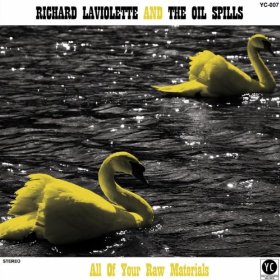
All of Your Raw Materials - Richard Laviolette and the Oil Spills


All of Your Raw Materials

Richard Laviolette & the Oil Spills
You’ve Changed Records.

SCQ Rating: 73%

Beneath his youthful exterior, Richard Laviolette has rare spirits running amuck, some as rightfully vigorous as a man in his early twenties, others weathered and defeated by generations of hardships. That timeless passion is ubiquitous over the course of All of Your Raw Materials, a bluegrass-tinged folk record that should hold honest appeal to country purists and fans of You’ve Changed Records’ recent roots attraction.

Chocked-full of plump arrangements (including lots of banjo, fiddle and pedal steel) courtesy of the Oil Spills, All of Your Raw Materials surpasses the ambitions of a homage album on the coattails of Laviolette’s voice, all ancient yet wound-up. Although slower tracks like ‘Winterbreath’ and ‘Bodymaps’ serve the bittersweet delights, Laviolette’s charisma on ‘Funeral Song’ is possibly the most charming spit in the face to death I’ve ever heard. With a loose choral chanting behind him, ‘Funeral Song’ evokes all that’s proper about real country music, from its blue-collar camaraderie to some unforgettable musicianship. It’s a DIY punk attitude when the power’s out.

Before All of Your Raw Materials was re-issued by You’ve Changed Records and before Standard Form released it in 2009, it’s worth noting that these recordings were actually made way back in the summer of 2008. It has taken awhile for Richard Laviolette and the Oil Spills to get their due, but I can’t deny that now might be the ideal time to check them out. While All of Your Raw Materials is admittedly too laid back for these dog days of summer, the warmth and longing of its songs should afford some great comforts as September comes calling. Prepare thyself now. Old-time folk and country never goes out of fashion, especially when it’s this effortlessly authenticity.

Thursday, August 12, 2010

Flugente 2 - Flugente


Flugente 2

Flugente
Independent.

SCQ Rating: 73%

Nearly fifty years after his death, Woody Guthrie is just starting to get his due. In the past decade alone, Guthrie has been inducted into multiple Halls of Fame while his work in music and poetry have earned him four Grammy nominations, three of which he won. What makes all of this buzz, which eluded him during the healthy years of his life, so ironic isn’t that his talent was overlooked at his prime, but that his biggest hit, ‘This Land Is Your Land’, remains a cultural treasure that supersedes the most memorable of radio’s mainstream hits. In few other cases can I think of a one-hit wonder as tragically underappreciated as Guthrie, so it almost seems fitting that many talented folk artists carrying the famed troubadour’s torch also reside deep beneath the public eye.

Ahead of the pack is surely Flugente, solo project for The Blam ringleader Jerry Adler. His voice, an unhinged rasp of yearning, could easily belong to a man approaching mid-life crisis but it’s Adler’s guitar-picking, punch-drunk and limber, that reveals his youth on Flugente 2. That energy enlivens a track like ‘I Swear To Tell the Whole Truth and Nothing But the Truth So Help Me God’, a humorous but thoroughly cynical tale of jury duty, and validates Adler’s storytelling voice next to Guthrie’s or Dylan’s. Memorable as that yarn is, Flugente 2’s highlights are all rooted in somber arrangements that showcase his melodic acoustics and earnest lyrics. ‘It’s Not Just the Summer That Is Ending’ seems to catch Adler aging with his autumnal imagery while ‘I Can’t Wait Anymore’ rests upon terse finger-picked chords and a piano-tapped chorus that breaks him free of all rust. Both resonate like instant classics and seem destined to make waves – be it now or in fifty years. I'd prefer now. Seriously, these songs need to be heard.

As sharp and well-groomed as most of Flugente 2 is, it’s countered by a smattering of tracks that defy the listeners’ embrace. First to disappoint is ‘Which Side Am I On?’, a longwinded ramble with no discernable lyrical aim beyond exhausting every rhyme in Flugente’s rhyme-book. At least that track sounds in keeping with Adler’s rustic introspection; ‘Apeman’, on the other hand, suffers from a smorgasbord of problems, the least of which being that it’s a Kinks cover. Gently performed and – let’s face it – pretty hokey, ‘Apeman’ ends the album on a disparaging note, diluting Adler’s wit and charisma into an out-of-context whimper. Only in extenuating circumstances like this can the idea of closing on Flugente 2’s previous track, ‘America the Beautiful’, seem like a really good idea.

That only a few bad apples have rubbed so much resentment into this listener should speak volumes of Flugente 2’s hinted genius. If Jerry Adler can hone his political sentiments in ways he’s proven capable of wielding with the emotional, Flugente might just achieve the recognition that eluded modern folk's grandfather.

Women + Country - Jakob Dylan


Women + Country

Jakob Dylan
Columbia/Sony Records.

SCQ Rating: 67%

Seeing Things wasn’t just a surprise favourite for me in 2008, it was the return of a ghost I’d kept as company years earlier, one I abandoned after the MOR blandness known as Rebel, Sweetheart. More than a folk record, Seeing Things wiped the board clean – no more band, no more radio-play anxiety – and by sounding entirely timeless, those ten stripped-back songs presented Jakob Dylan as the heir to a genre he’d spent the past decade running from. It wasn’t a masterpiece – hell, it didn’t need to be – but Seeing Things was a poignant display of Dylan’s best strength: intimate storytelling that dabbled in light and shade, family and nation.

In that respect, Women + Country may seem like a predictable follow-up, with Dylan’s protagonist still doubling between famished farmer and everyman soldier, but it isn’t. Trading Rick Rubin’s minimalist approach for T Bone Burnett’s arsenal of session-players, this sophomore solo effort boldly announces itself as an almanac of last century’s Americana, with ancient stabs of ragged rhythm guitar (‘Standing Eight Count’) and brass-stomping Louisiana blues (‘Lend a Hand’). Although no one would question his impressive contributions to the Wallflowers’ break-out Bringing Down the Horse, Burnett seems oblivious to the subtleties of Dylan’s recent direction and what made Seeing Things tick. Dylan’s voice hasn’t thinned, he’s simply found more effective ways of deepening his lyrics through intonation, and some of Burnett’s heavy-handed arrangements smother that intimacy. A jaunty saloon-esque piano may lend promise to ‘They’ve Trapped Us Boys’ but its two-note bass strut – as if prepped for early Johnny Cash - challenges Dylan’s rasp. When wielded sympathetically, however, Burnett’s embellishments create a lush backdrop for ‘Nothing But the Whole Wide World’ or weary-eyed country on ‘Truth For a Truth’.

It isn’t just the haphazard arrangements shaping this disc’s destiny. As the origin of Women + Country goes, Burnett tested Dylan to write ten songs in the vein of ‘Nothing But the Whole Wide World’, a previously recorded track for Glen Campbell. Now if there’s one aspect to songwriting you shouldn’t rush, it’s probably the song-structure underlying all the bells and whistles, right? Well, that emphasis on speed-writing accounts for some of Women + Country’s sketch-like moments. Although much of the record’s second-half tends to drag, the hollowing-out point is reached on ‘Smile When You Call Me That’; an exhausted, middle-of-the-road country song that makes a convincing caricature of Dylan and Co. as a burnt-out bar-band. Never has Dylan written a song so similar to an Uncle Kracker tune.

For all the tricks up its sleeve (Neko Case, where are you?), Women + Country has surprisingly little to say. That isn’t to imply it’s at all unlistenable or aggravating. In my books, a change in direction is always commendable and the partnership of Dylan and Burnett has certainly crafted a singular statement – swampier, mustier even, than Seeing Things. But this serves better as an Americana fix than as a good Jakob Dylan album, in no small part because the production outshines the songs.

Friday, May 21, 2010

Shady Retreat - Peasant


Shady Retreat

Peasant
Paper Garden Records.

SCQ Rating: 73%

Sleeper hits tend to forecast blockbusters. You know, how Alligator built steady steam over two years before the release of Boxer made the National stars, how Greetings From Michigan paved the way for Sufjan Stevens’ Illinoise, etc. The list goes on and my sole theory behind this trend boils down to how success, however gradual or marginalized, brings out an artist's confidence. As such, blockbusters are often celebrated as being nervier or grandiose due to said album’s ability to focus on the artist's proven strengths as a songwriter, vocalist or arranger. On The Ground moved units and sounded like a sleeper hit; Damien DeRose's aching voice caressing a nerve still sensitive six years after Elliott Smith's death, yet the authenticity of his songs disarmed us of our cynacism.

With Shady Retreat, I admit I expected a blockbuster. Building from On The Ground's "you+me" focused songwriting and supplemented by the increasingly predictable context of an album created in backwoods isolation, Shady Retreat could've continued DeRose's songwriting growth while muscling up on his arrangements. Instead of letting his cabin-based locale motivate these songs toward a striving objective, they instead excuse Shady Retreat's power-outage minimalism. Clocking a mere twenty-eight minutes, Peasant's follow-up is a creaking folk record so direct, you might wish he'd at least meandered a bit. Even amid the record’s sloppier moments, as on the ho-hum waiting game of ‘Prescriptions’, DeRose's voice bridges any creative divide. Where would 'The Woods' be without that chorus of multi-tracked harmonies which provide his setting with much-needed shadows? How convincing would ‘Hard Times’ be without DeRose’s timbre bloodletting everywhere? His intuition as a vocalist may salvage much of this material but it doesn’t distract from how off-the-cuff Shady Retreat can feel. The final moments of ‘Slow Down’ spotlight a breakdown so half-hearted that I’d swear he tried to adlib the last lyrics. In effect, the song splinters into straws. In these seldom moments, DeRose sounds like he’s coasting… and when his album is under half an hour, seldom is too often.

All expectations aside, let the blockbuster be damned! By no means is this album a letdown because DeRose didn't give us a dramatic showstopper, although some signs of ambition would've been comforting. Had Peasant locked onto the ramshackle appeal of 'Slow Down' or 'Well Alright', Shady Retreat would've at least earned a well-rounded identity as a 70s songwriter record that enunciates classic Neil Young dissonance. Or had he stuck with the tried-and-true polish of On The Ground, which slicks sporadically over ‘Pry’ or the rollicking ‘Thinking’, he could've met some held-over expectations and maintained the status quo. At its best, Shady Retreat provides different angles into DeRose’s songbird genius, via the pillowed punch of ‘Tough’ or ‘The End’. Like any retreat, Peasant’s latest will satiate what heals you but ultimately feels a little malnourished.

Way Down Here - Cuff the Duke


Way Down Here

Cuff the Duke
Universal/Noble Records.

SCQ Rating: 74%

Long has Cuff the Duke maintained a strange foothold in the Toronto music scene. For years they’ve built their reputation as a recognizably gifted band – albeit one that often settles for opener slots - whose affiliation with a major-label keeps their records relatable to the city’s thriving indie-scene only by geographic proximity. Marginalized from the progressive sounds of Toronto’s best indie labels (Out of This Spark, Arts & Crafts) and humbled by the success of their Universal Records-backed colleagues, Cuff the Duke seem perpetually rooted to the local scene. So it’s with some relief that the snow-touched backstreets captured on 2007’s Sidelines of the City have been erased in favour of a blanketed gray winter, as if the quintet sought to remove themselves entirely from the avenues of their urban sanctuary.

And that’s just what they did. The recording for Way Down Here displaced the band to Greg Keelor’s studio in northern Ontario, a sprawling farm virtually isolated in the dead of January. These cut-off surroundings assisted in crafting Cuff the Duke’s most cohesive collection to date; a rootsy mix of mellow rock songs and understated country influences which reveal their songwriting at its most vulnerable. ‘You Were Right’ opens the album on an introspective, 1970s Neil Young, note, with vocalist Wayne Petti matching his welcome timbre to softly treading acoustic guitar. From that fireside warmth, the band branches out on the lightly psychedelic ‘Promises’, the affable acoustic-chug of ‘Listen to Your Heart’, and with the electric guitar in ‘It’s All a Blur’ trembling like a white-noise blizzard. As Way Down Here becomes increasingly clocked-in by balladry (the slightly overlong ‘Like the Morning’), a track like ‘Another Day in Purgatory’ represents the much-needed bluster of a crashing rock song.

Utilizing a restrained alt-country vibe that fits like a good suit, Way Down Here is easily Cuff the Duke’s most well-rounded, impressive release. And while a song as altogether beautiful as ‘Need You’ finds these boys on the cusp of greater songwriting, nothing here will manage to break that familiar glass-ceiling they’ve been fluttering against. Too few chances are taken to elevate Way Down Here beyond the predictable confines of “another good Cuff the Duke album”, with ho-hum tracks like ‘Follow Me’ cloying the bands’ more genuine moments. That Cuff the Duke are currently on a cross-country trek with Blue Rodeo, a Canadian institution in and of itself, likely makes this band’s bed permanently north of the 49th parallel; with this wintry release, I can’t think of a better place to lay down roots.

November, November - Horse Stories


November, November

Horse Stories
Perfect Black Swan Records.

SCQ Rating: 85%

Quality songwriters don’t come around as often as we’d like them to. Really, it isn’t about a song they’re pushing or even a particular sound they’re toting so much as a demeanor, a vulnerability that you can relate to. In that respect, choosing to follow a songwriter’s work with any determination is like choosing a friend; you want someone you can share ideals and desires with, and yet someone you don’t entirely understand. Toby Burke, the Los Angeles via Australia-based artist behind Horse Stories, broke the ice for me with ‘Hummingbird’, a gentle folk song so pure and powerful it’s nearly gospel in its ethereal build. If ‘Hummingbird’ hints at the promise of great things, November, November provides proof of those declarations and the beginnings of an assured friendship.

Originating in a windowless garage under Burke’s LA house, these songs have endured three years and countless demos of transformation and refinement, as Horse Stories reinvented his stylistic approach. And as November, November spread track-by-track from my stereo, I kept those details close to heart, hoping no brash guitar or clumsy lyric would interrupt Burke’s patient flow. Luckily – no, incredibly – this album’s trial of refinement has resulted in no such wayward decision; instead, Burke has hewed ten impeccable tracks, founded on acoustic guitar but stretched with bouts of percussion and strings so engaging, their emotional resonance outlasts their economic run-times. The dexterous drumming and finger-picked guitar that announces ‘Standing In the Snow’ sets a bleak scene of two stubborn people, possibly lovers, figuring each other out while the odd electric outburst blows through a frigid breeze. With a harder edge but no less patient is ‘Hole In the Head’, where Burke repeats – as if the impossible has come true – “I made it, I made it,” before a crest of quietly aching guitar-work. Although November, November’s first half, rounded out by the charmingly nostalgic ‘Telephone Message…’, cannot be trumped, the record’s second half nearly succeeds in matching it. Burke’s deliberate pacing on ‘The Weight’ and ‘Believer’ crests with the latter, sturdy and string-laden, before settling confidently upon two soft closures. As ‘Rockinghorse’ pleads for the return of a runaway over antique piano and soft horn, ‘The TV’ seemingly sums up all of November, November’s tasteful markers – subtle vocal echoes, pastoral acoustics, acute moments of drama – in its stirring, choral refrain.

To open one’s album with a song as instantly loveable as ‘Hummingbird’ is a no-brainer; what separates Burke from the many one-hit troubadours, however, is that November, November’s nine subsequent tracks are as good, if not better. Between the lyrics and in Burke’s slight twang, I can’t help but hear elements of Ryan Adams, moody but confessional, touching these songs as if passing the torch from one great songwriter to another. In Horse Stories lies a worthy successor to the folk crown, no doubt, as well as a friend you never knew you had.

Thompson Falls - Overspill Poets


Thompson Falls

Overspill Poets
Revenge Western Records.

SCQ Rating: 68%

Nearly twenty years I spent dreaming of bigger cities before I skipped my hometown for university, all the while equating those small-town stretches of society as a wasteland of thumb-twiddling. Since then, the often spontaneous decision to pack my bags has carried me to larger cities and eventually Canada’s biggest, where I soaked up its compromised culture in subways and street-meat. At some point during this time, I began looking back at those smaller cities in a new light, recognizing how unburdened they were and how free I felt. Titled after an Idaho town of the same name, Thompson Falls evokes that familiar nook of one-way streets and quiet sidewalks I longed for, where each building and passing individual represents a portion of the whole, well-known and essential in their role.

As it happens, Thompson Falls is also an ideal soundtrack for trekking through the forgotten backwoods of wherever, combining a well-honed study of jangle rock with some alternative country leanings. Kicking off strong with the rustic pleasantries of the title track, Overspill Poets (George Kitching and Tim Taylor) dig into the record’s best tracks early with the full-band folk-rock of ‘The Sound of Sirens’ and Taylor’s memorable vocals which hang over ‘Boxing Gloves’ like a traditional celtic pub-song. Particular attention must be paid to ‘Summer’ however, as by harnessing some unsettled guitar and a drum-machine, Overspill Poets create a moody, modern alt-rock tune that, at the risk of not quite fitting in, out-muscles everything else on Thompson Falls. And while the album’s latter half has its share of standout tracks (the jagged licks of ‘Northern Star’ spring to mind), Overspill Poets linger too often in affable, MOR arrangements that slide into the background for listeners. Such tracks like ‘Leave It Behind’ and ‘Tomorrow When You Leave’ lack enough presence to truly register and end up making an album of twelve songs feel overlong.

Despite the goofiness underlying a description like “Bob Mould crashing into REM on Johnny Cash’s iPod”, the author of that quote succeeds in name-dropping the eclectic roster Overspill Poets translate from. And in spite of some flaws, Thompson Falls boasts a jangly alt-country sound I’ve admittedly never heard, one that is fully formed and a hopeful launching point for this English duo. If I may: like Morrissey forgetting his ego with a bar-band in Middle America. No good?